
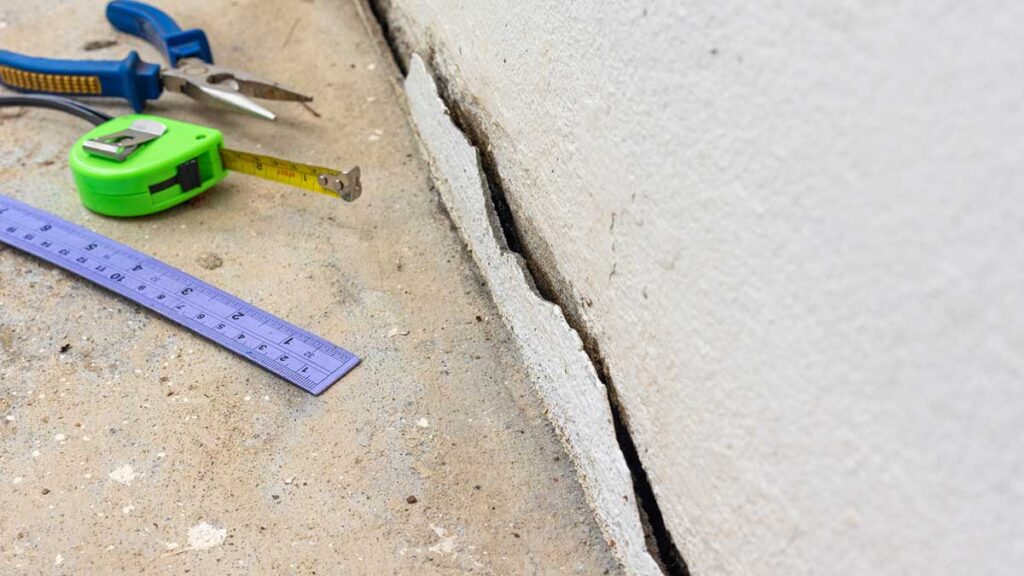
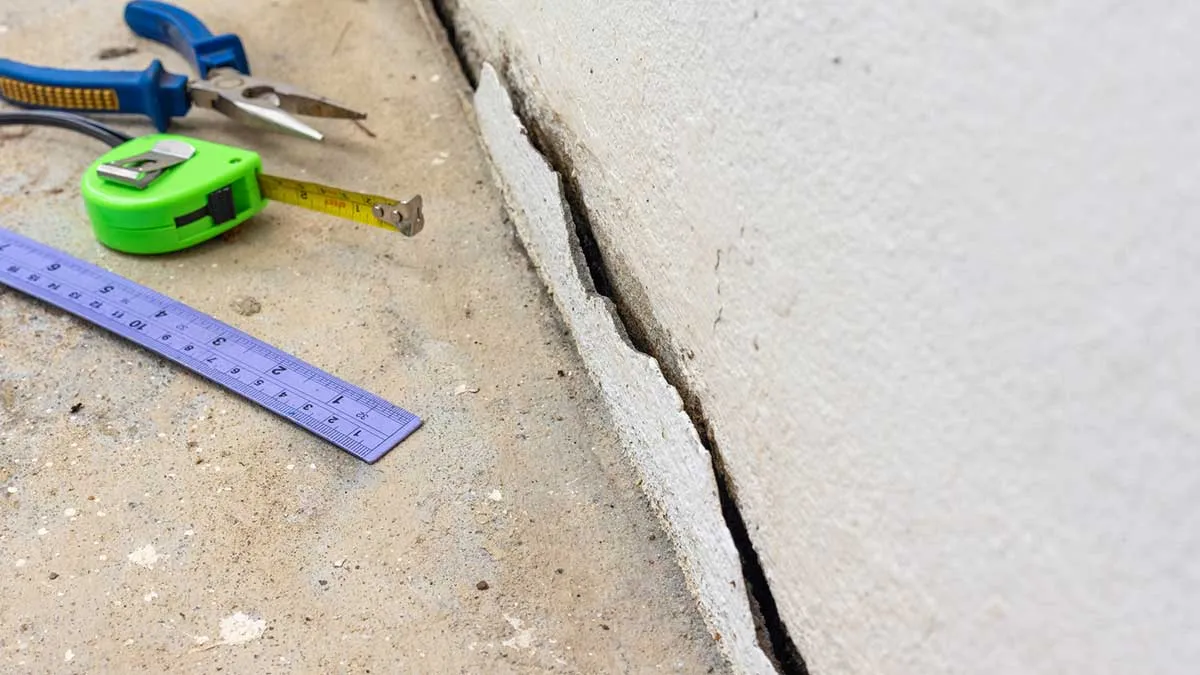
That small crack snaking up your living room wall is easy to ignore. So is the bedroom door that suddenly sticks. It’s tempting to write these off as normal house settling. But sometimes, they’re not so innocent. These subtle clues can be the first warnings of a much larger issue: a sinking foundation. This isn’t just a cosmetic problem; it’s a threat to your home’s entire structure. Understanding the signs of foundation sinking is the first step toward a proper sinking foundation repair and protecting your biggest investment.
That’s where foundation repair experts come in. Let’s dive into the world of foundation sinking and uncover the hidden truths that could be jeopardizing your home or commercial structure.
What is a Sinking Foundation?
A sinking foundation refers to a foundation that is settling unevenly or sinking into the ground. This can lead to a range of structural problems, such as cracks in walls, uneven floors, and doors or windows that no longer close properly.
How Much Sinking is Too Much?
It’s true that most homes settle a bit over time, but there’s a clear line between normal settling and a serious structural problem. So, how much movement is too much? Experts generally agree that if your foundation has moved more than one inch for every 20 feet, it’s a sign of trouble. It’s not just about the total amount of sinking, but also how evenly it’s happening. Uneven sinking, where one side of your house is dropping faster than the other, is a major red flag. This differential movement puts immense stress on your home’s frame, leading to the kinds of problems that can’t be ignored, like sticking doors, cracked drywall, and sloping floors.
A sinking foundation is more than a cosmetic nuisance; it can seriously compromise the safety and structural integrity of your entire house. Ignoring the signs won’t make them go away—in fact, it almost guarantees that the problem will worsen, leading to far more expensive and complicated repairs later on. If you suspect your foundation is sinking beyond the normal range, the most important step is to get a professional assessment right away. A licensed foundation engineer can evaluate the situation, determine the cause of the movement, and provide a clear path forward to secure your home. This isn’t a time for guesswork; getting an expert opinion is crucial for protecting your investment.
Reasons Behind a Sinking Foundation
The primary reason for a sinking foundation is the ever-changing soil conditions beneath your feet. Several factors can contribute to this problem:
1. Soil Erosion
Soil erosion can remove the ground supporting your foundation, leading to settling and sinking. This can be caused by poor drainage, heavy rainfall, or water runoff.
2. Poor Drainage
Inadequate drainage systems around your home can result in water pooling near the foundation, which can soften the soil and lead to settlement issues.
3. Soil Compaction
If the soil wasn’t properly compacted during construction, it can settle over time under the weight of the foundation, causing the foundation to sink.
4. Tree Roots
Tree roots growing near your foundation can cause significant damage. As roots expand, they can push against the foundation, leading to cracks and movement. Additionally, roots can absorb moisture from the soil, causing it to shrink and settle.
5. Changes in Weather
Extreme temperature and moisture fluctuations are common causes for a sinking foundation. Freeze-thaw cycles can cause soil to expand and contract, which can lead to foundation problems, especially if the soil wasn’t properly prepared during construction.
Damp Soil Freezes
In regions with extremely cold temperatures, damp soil surrounding your foundation can freeze and expand, exerting pressure on the foundation walls or causing voids below your footings, resulting in a sinking foundation. This can lead to cracks, bowing walls, and other structural issues over time.
Mold Growth
Excess moisture in your foundation can create the perfect breeding ground for mold and mildew. If you notice mold growth in your basement or crawl space, it could indicate poor drainage or foundation leaks, both of which require immediate attention.
6. Expansive Soils
Soils that change in volume due to moisture content, such as clay soils, can cause significant foundation issues. Clay soils swell when wet and shrink when dry, leading to uneven pressure on the foundation and potential sinking.
7. Collapsible Soils
Some soils are naturally loose and prone to collapsing when subjected to weight or moisture changes. These collapsible soils can cause sudden and uneven foundation settlement, leading to structural damage.
Addressing a Sinking Foundation
To address a sinking foundation, it is crucial to identify the underlying cause and implement an appropriate repair solution. Common methods include:
- Installing push piers, helical piers, or slab piers to provide additional support and stability.
- Grout stabilization to fill voids and stabilize loose or shifting soil.
- Mud-jacking or poly-jacking to lift and level settled concrete slabs.
A professional foundation repair specialist can assess your situation and recommend the best solution based on the unique conditions of your property.
Warning Signs You Shouldn’t Ignore
Now, let’s talk about warning signs. Your home might be trying to tell you something, and it’s essential not to ignore the signs. Keep an eye out for cracks in your walls, especially those that resemble stair steps or seem to grow over time.
Sticky doors and windows that refuse to budge? Yep, that’s another red flag. And if your floors start to resemble a funhouse with their uneven surfaces, it’s time to call in the cavalry – or should we say, the foundation experts?
Is a Sinking Foundation Dangerous?
Beyond the cosmetic issues like cracked drywall and sticky doors, a sinking foundation poses a genuine threat to your property’s structural integrity and your family’s safety. While a small amount of uniform settling is normal for any structure, uneven or significant sinking is a serious problem that should never be ignored. The foundation is what holds up your entire home, and when it becomes unstable, it can set off a chain reaction of problems that range from inconvenient to downright hazardous. The real dangers aren’t always visible; they can hide within your walls or beneath your floors, creating risks you might not be aware of until it’s too late.
Damage to Utility Lines
One of the most immediate dangers of a shifting foundation is the stress it puts on your home’s utility lines. Gas, water, and sewer pipes are rigid and not designed to bend. As your foundation sinks or moves, it can pull on these connections, causing them to crack, bend, or even break entirely. A broken water line can lead to extensive flooding, further destabilizing the soil around your foundation and creating a perfect environment for mold. Even more alarming is the risk of a damaged gas line, which can cause a dangerous leak, creating a serious fire or explosion hazard. These issues often happen out of sight, making a professional foundation assessment critical if you suspect a problem.
The Risk of a House Collapse
Let’s address the elephant in the room: can your house actually collapse? While a sudden, complete collapse is extremely rare, it’s not impossible in cases of severe, prolonged neglect. More commonly, a failing foundation leads to progressive structural failure. This means parts of your home become unstable over time. You might see walls beginning to bow inward, chimneys separating from the house, or floors sloping dramatically. The foundation supports the entire load-bearing frame of your home, and when it fails, that support system is compromised. At this point, the structure is no longer safe. Getting a structural inspection at the first sign of trouble is the best way to prevent the situation from escalating to a critical level.
How to Prevent Foundation Sinking Before It Starts
Simple, consistent home care can greatly reduce the chances of foundation sinking. Here are the most effective prevention steps to follow:
Maintain Proper Grading
The soil should slope away from your home so rainwater and runoff move outward instead of soaking the foundation.
Install and Clean Gutters Regularly
Functioning gutters and downspouts keep water from pooling near the base of your home, which helps prevent erosion and soil weakening.
Use Downspout Extensions
Your gutters do the heavy lifting of collecting rainwater, but where that water goes next is just as critical. Think of downspout extensions as a simple, inexpensive solution that can prevent major headaches later on. These attachments direct water far away from your home’s base. Without them, rainwater pools right next to your foundation, softening the surrounding soil and creating the perfect conditions for settlement. Over time, this constant moisture leads to erosion and weakens the very ground supporting your house. A good rule of thumb is to direct runoff at least five to ten feet away, giving your foundation the stable, dry ground it needs to stay put. If you’re ever concerned about your home’s drainage or notice signs of water pooling, a professional structural inspection can identify potential problem areas before they become serious issues.
Use Soil Moisture Barriers in Dry Climates
In drought-prone areas, moisture barriers or controlled watering can stop soil from shrinking and pulling away from the foundation.
Plant Trees Thoughtfully
Keep large trees and plants at a safe distance so their root systems don’t draw moisture from the soil or push against the foundation.
Install a Drain Tile System
If poor drainage is the main culprit behind your water woes, installing a drain tile system might be the solution. This system, often called a French drain, is essentially a perforated pipe surrounded by gravel that collects and redirects groundwater away from your foundation. Inadequate drainage can cause water to pool, softening the soil and leading to settlement. A drain tile system is an effective way to manage this by keeping the soil conditions around your home stable. While it’s a more involved project, it’s a powerful, long-term fix for persistent water issues that threaten your home’s stability. Consulting with a foundation engineer can help determine if this is the right approach for your property.
Consider Retaining Walls
For properties with sloped terrain, managing soil and water flow presents a unique challenge. If your home is on a hill, runoff can accelerate soil erosion and put immense pressure on your foundation. Building retaining walls can be a game-changer in these situations. These structures are designed to hold back soil, prevent movement, and help direct water away from your home’s base. By stabilizing the landscape, a well-designed retaining wall reduces the risk of foundation sinking caused by shifting earth. It’s a strategic investment that provides both functional support and can also add aesthetic value to your landscaping.
Schedule Annual Foundation Inspections
A yearly check by a professional helps identify early warning signs, allowing you to address small issues before they become costly structural problems.
Who to Call When Trouble Strikes
So, what do you do if you notice signs of a sinking foundation? Don’t panic – there are experts out there that carry your best interest at heart (And won’t just make a quick buck.)
One of the biggest concerns that professionals are facing are contractors that sell “one size fits all” solutions to repairing foundations. A qualified structural engineer is your knight in shining armor, armed with the knowledge and expertise to assess the situation and recommend the best course of action to fix a sinking foundation. Whether it’s helical piers or steel beams, they’ll whip your foundation back into shape in no time.
Why You Should Call a Structural Engineer First
When you suspect foundation issues, your first instinct might be to call a foundation repair company. However, I strongly recommend starting with an independent structural engineer. Think of it this way: you wouldn’t ask a pharmaceutical company to diagnose your illness; you’d go to a doctor for an unbiased opinion. A structural engineer works for you, not a company selling a specific product. Their only goal is to accurately diagnose the root cause of the problem and design the most effective and economical solution. This unbiased assessment ensures you’re not paying for unnecessary, expensive repairs and gives you a clear plan to take to contractors for apples-to-apples quotes.
The Problem with “Foundation Specialist” Companies
While many reputable foundation repair contractors exist, some companies are more focused on sales than solutions. As one homeowner on Reddit wisely noted, “Be careful with ‘foundation specialists.’ Many of these companies are sales-focused and might try to sell you expensive repairs you don’t actually need.” These companies often have a preferred method—like push piers—and may recommend it for every situation, whether it’s the right fix or not. An engineer, on the other hand, will evaluate your home’s specific conditions and provide a tailored repair plan, which might be simpler and more affordable than you think. Getting an engineer’s report first empowers you to be an informed consumer.
Why Foundation Repair is Not a DIY Project
As tempting as it might be to tackle home repairs yourself, fixing a sinking foundation is one job you should always leave to the professionals. According to the experts at Angi, “Fixing a sinking foundation is a big job that needs special tools and knowledge. It’s not a project you should try to do yourself.” The process involves complex engineering principles, heavy machinery, and a deep understanding of soil mechanics. A mistake could compromise your home’s entire structural integrity, leading to far more dangerous and costly damage. Protect your investment and your family’s safety by hiring qualified experts for the initial inspection and the subsequent repair work.
Understanding Repair Costs and Financial Options
Let’s be real: the thought of paying for foundation repair can be stressful. The cost can vary significantly based on the extent of the damage, the repair method needed, and your home’s location. While it’s a significant investment, ignoring the problem will only lead to more extensive and expensive issues down the road. Understanding the potential costs and your financial options ahead of time can help you prepare and make the best decision for your property. It’s important to gather information and explore all avenues before committing to a plan.
Average Cost of Foundation Repair
So, what’s the bottom line? According to This Old House, “The typical cost for professional foundation repair is between $2,171 and $7,811.” This is a broad range because every situation is unique. Minor crack repairs might be on the lower end, while extensive work involving hydraulic piers could be on the higher end or even exceed that estimate. An engineer’s detailed repair plan is invaluable here, as it allows you to get precise bids from multiple contractors, ensuring you pay a fair price for the exact work that’s required.
Does Homeowners Insurance Cover Sinking Foundations?
This is one of the first questions homeowners ask, and unfortunately, the answer is usually no. As Progressive explains, “Homeowners insurance usually does not cover damage from a sinking foundation, unless it’s caused by specific events like natural disasters or fire.” Most standard policies exclude damage from soil movement, settling, or poor construction. However, it’s always worth reviewing your specific policy and speaking with your insurance agent. If the foundation damage is a direct result of a covered peril, like a burst pipe, you may have a valid claim.
Financial Aid for Foundation Repairs
If insurance won’t cover the cost, don’t lose hope. You still have options. Some government programs may offer financial assistance for critical home repairs. This Old House suggests that “Government programs might offer financial help for home repairs, including foundation work.” Look into FHA Title I loans or check with your state and local housing authorities for grants or low-interest loans, especially for seniors or low-income households. Other common financing routes include a home equity line of credit (HELOC), a home equity loan, or a personal loan from your bank or credit union.
Regional Concerns: North vs. South
If you’re in the Northern US, chances are you have one. But did you know that basements can be a breeding ground for foundation troubles? Poor drainage and hydraulic pressure from waterlogged soil can spell disaster for basement walls.
On the flip side, in the South, where basements are less common, slab foundations face their own challenges, like soil erosion and poor compaction. It’s a tale of two foundations, but the principle remains the same – don’t ignore the signs, and always consult a pro.
8. Drought Conditions
Just as too much water can be a problem, so can too little. During extended dry periods or droughts, the soil around and under your foundation can lose a significant amount of moisture. This is especially true for clay-rich soils, which are common in the Denver area. As the soil dries out, it shrinks and pulls away from the foundation, creating gaps and voids. This loss of support means your foundation is essentially left hanging in certain spots, causing it to settle and sink into the newly formed empty spaces. This is why you might notice new cracks appearing after a particularly dry summer.
9. Nearby Excavation
Construction in your neighborhood can have a bigger impact on your home than just noise and traffic. Any significant digging or excavation nearby—whether for a new home, a swimming pool, or major utility work—can disrupt the delicate balance of the soil supporting your foundation. This activity can remove adjacent soil that was helping to keep your ground stable, leading to a loss of lateral support. When the surrounding soil shifts or collapses into the excavated area, it can cause your foundation to become unstable and sink. It’s a critical factor to consider, especially in developing areas with lots of commercial additions.
10. Outdated Construction
If you live in an older home, its foundation might be sinking simply due to the construction practices of its time. Decades ago, the standards for preparing a site for construction weren’t as rigorous as they are today. A common issue is that the soil beneath the foundation was never properly compacted. Over many years, the immense and constant weight of the house gradually compresses this loose soil. This slow, continuous settlement can lead to significant sinking, causing the tell-tale signs of foundation problems to appear long after the home was built. A foundation engineer can help determine if this is the root cause.
11. Natural Disasters
While we hope to never experience them, natural disasters can cause sudden and severe foundation damage. Events like floods, mudslides, or even nearby earthquakes can drastically alter the ground beneath your home. Floodwaters can rapidly erode the soil supporting your foundation, literally washing it away and causing parts of your home to collapse or sink. Similarly, seismic activity can shake and liquefy the soil, destroying its ability to bear weight. These are extreme scenarios, but they highlight how vulnerable a foundation can be to powerful natural forces that are entirely out of a homeowner’s control.
Signs of Sinking Foundations
You may not give much thought to your home’s foundation – after all, it’s beneath your feet, out of sight, out of mind. But when trouble brews beneath the surface, it can manifest in various ways. Here are some signs that your foundation might be trying to tell you something:
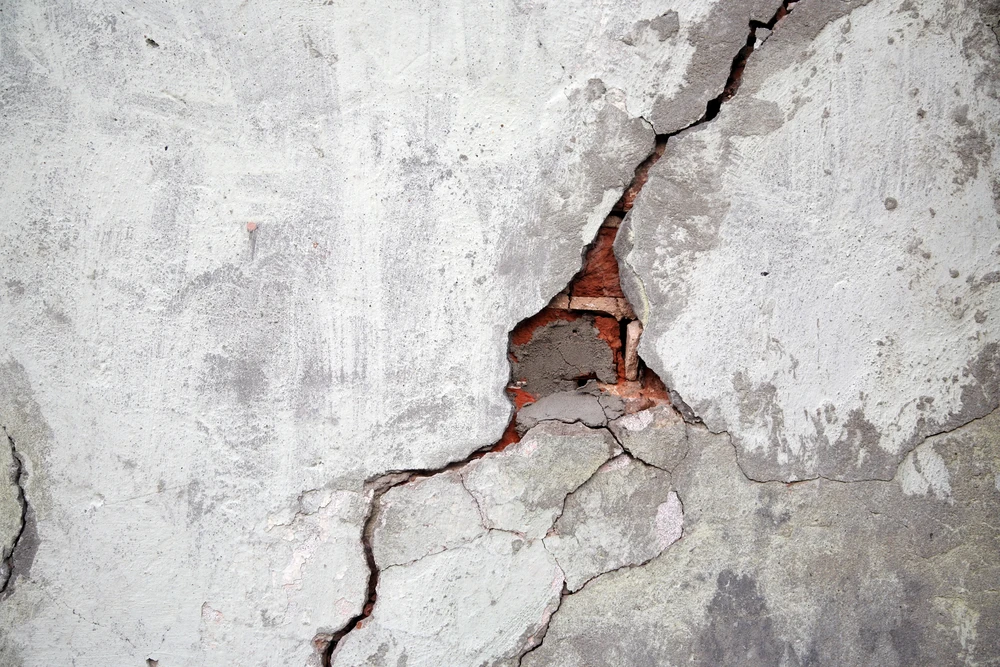
1. Cracks in Walls and Floors
Ever noticed hairline cracks creeping up your walls or across your floor? These seemingly innocent blemishes can actually be early warnings of foundation issues. As your home settles unevenly, it puts stress on the walls and floors, leading to foundation cracks that can carry through into the superstructure.
While some foundation settlement is to be expected for new buildings, if cracks start to appear in exterior walls, this may be a sign of a sinking foundation and a permanent solution should be found sooner rather than later.
What to Look For in Cracks
So, how do you tell a harmless settling crack from a “call for help” signal? The key is to look at the crack’s direction, size, and location. Horizontal cracks or those running at a 45-degree angle are often more concerning than simple vertical ones. Also, pay attention to the width. If a crack is wider than an eighth of an inch or is wider at one end than the other, it’s a good indicator that there’s more than just normal settling happening. Another tell-tale sign is a “stair-step” pattern, especially in brick or concrete block walls. This pattern often follows the mortar lines and points directly to uneven foundation movement. If you see these types of cracks, or notice new gaps forming between your walls and window frames, it’s a clear sign that you should have your home evaluated. A foundation engineer can properly diagnose the issue and determine the cause, giving you a clear path forward.
2. Sticky Doors and Windows
Have you ever struggled to open or close a door, only to blame it on humidity or aging hinges? While these factors might play a role, sticky doors and windows can also signal foundation problems. As your home’s structure shifts, it can throw door frames and window casings out of alignment, making them harder to operate smoothly.
3. Uneven Floors
Walking through your home shouldn’t feel like navigating a funhouse maze. If your floors are made of concrete they are either floating on the walls supported by foundations, or laying directly on compacted ground beneath.
In both of these instances changes in the soil underneath the slab will result in movement. If you notice uneven floors in your building, it could be early warning signs of foundation settling. It may be time to consult your foundation repair expert.
4. Bowing Walls
Bowing or bulging walls, particularly in basement or crawl spaces, are a clear indication of foundation stress. This can be caused by excess hydrostatic pressure from saturated soil or poor construction practices.
5. Sticking Doors and Windows
Foundation movement can cause door frames and window casings to become misaligned, resulting in doors and windows that stick or won’t close properly. If you notice this issue, it’s important to address the underlying foundation problem to prevent further damage.
5. Leaning Chimney
Your fireplace might be the cozy heart of your home, but a chimney that is leaning or pulling away from the house is a serious red flag. Because a chimney is so heavy, it’s often built on its own separate footing. If the soil beneath that footing shifts or compacts, the chimney can begin to tilt, creating a dangerous gap between it and the rest of your home. This is a classic and often dramatic sign of foundation settlement. Ignoring a leaning chimney is not an option, as it poses a significant structural risk. A thorough structural inspection is the critical first step to diagnose the underlying cause and determine the safest way to secure both your chimney and your home’s foundation.
6. Other Interior Signs
Sometimes, the most compelling evidence of a sinking foundation isn’t in the basement or on the exterior walls, but in the small details of your finished living spaces. As the structure of your home shifts, it puts stress on interior elements in ways that can seem minor at first glance. However, these subtle clues are often early warnings of significant movement happening below. Paying attention to things like popping nails in your drywall or new gaps appearing around cabinets can help you catch a foundation issue before it escalates into a major repair project.
Popping Drywall Nails
Have you noticed small, circular bumps or cracks appearing on your painted walls? These are often caused by drywall nails or screws “popping” out. This happens when foundation settlement causes the wooden frame of your house to shift. As the studs move, they pull the drywall with them, which can force the nail heads to push through the surface layer of drywall mud and paint. While a single nail pop might just be a result of normal wood shrinkage, seeing them appear in multiple spots across your walls or ceilings is a strong indicator that your foundation is moving and requires a professional evaluation.
Gaps Around Cabinets and Counters
Your kitchen and bathroom cabinets are installed to be perfectly flush against the walls and floors. When you start to see gaps forming where there were none before, it’s a clear sign that something has shifted. A sinking foundation can cause floors to become unlevel and walls to pull away, creating noticeable spaces between your countertops and the wall or between the top of your cabinets and the ceiling. These gaps are more than just a cosmetic annoyance; they are direct evidence that your home’s structure is no longer square, pointing to uneven settlement in the foundation below.
7. Plumbing Problems
If you’re suddenly dealing with slow drains, frequent clogs, or water pooling in your yard with no obvious cause, the problem might be deeper than your pipes. Your home’s main plumbing and sewer lines often run through or below the concrete foundation slab. When the foundation sinks or shifts, it can exert immense pressure on these pipes, causing them to crack, bend, or separate entirely. This can lead to persistent drainage issues that plumbers can’t seem to fix. A broken pipe leaking water into the soil can also worsen the foundation problem, creating a vicious cycle. Investigating these complex issues may require a forensic analysis to pinpoint the connection between your plumbing woes and foundation movement.
6. Brick Walls, Concrete Block Walls, and Interior Drywall Cracks
Cracks in interior walls, especially near windows and doors, can be a sign of foundation settlement foundation cracks. These cracks may start small but can worsen over time if not addressed promptly.
What to Ask the Structural Engineer
When in doubt, it’s always best to consult with a qualified structural engineer. These experts can assess the condition of your foundation, identify any signs of a sinking foundation, and recommend a permanent solution or sinking foundation repair methods to ensure the long-term stability of your home.
Foundation Sinking Repair: How to Stop Your Home’s Descent
Now that we’ve explored the dangers of ignoring foundation issues, it’s time to roll up our sleeves and take proactive steps to prevent your house from sinking.
From pier systems like push piers and helical piers to non-underpinning fixes like resin injections and restumping, let’s dive into the world of foundation repair and maintenance.
1. Underpinning Solutions: Foundation piers
Push Piers
These heavy-duty steel piers are driven deep into the soil beneath your foundation to provide additional support and stability. Push piers are ideal for lifting and stabilizing settled foundations caused by soil compaction or erosion. They can be installed quickly and with minimal disruption to your home.
Helical Piers
Similar to push piers, helical piers are screw-like steel shafts that are drilled into the soil to support and stabilize your foundation. Helical piers are often used in areas with unstable soil conditions or where traditional concrete footings are impractical. They’re versatile, cost-effective, and can be installed year-round, making them a popular choice for foundation repair projects.
Slab Piers
If your home has a concrete slab foundation, slab piers may be the solution for you. These specialized piers are installed beneath the slab to lift and stabilize areas of settlement. Slab piers are typically installed at strategic locations around the perimeter of the slab, providing targeted support where it’s needed most.
Grout Stabilization
Grout stabilization involves injecting a grout mixture into the soil beneath your foundation. This process fills voids and stabilizes loose or shifting soil, providing additional support to your foundation. Grout stabilization is often used in conjunction with other foundation repair methods to enhance stability and prevent further settlement.
Mud-Jacking
Mud-jacking, also known as slab-jacking or pressure grouting, is a process where a slurry mixture (typically a combination of water, soil, sand, and cement) is pumped under a settled concrete slab. This mixture lifts the slab back to its original position and fills any voids beneath it, providing a stable base. Mud-jacking is a cost-effective and efficient solution for leveling uneven concrete surfaces such as driveways, sidewalks, and patios.
Poly-Jacking
Poly-jacking is similar to mud-jacking but uses a high-density polyurethane foam instead of a slurry mixture. The foam is injected beneath the concrete slab, where it expands and hardens, lifting the slab and filling any voids. Poly-jacking is a faster, lighter, and more precise method compared to traditional mud-jacking. It is highly effective for stabilizing and lifting settled concrete slabs with minimal disruption.
Each of these methods has its specific applications and advantages. A professional foundation repair specialist can assess your situation and recommend the most suitable solution based on the unique conditions of your property.
2. Non-Underpinning Foundation Repair
Resin Injections
Resin injections are a non-invasive solution for repairing cracks and voids in concrete foundations. A high-strength epoxy resin is injected into the cracks, where it expands to fill the void and bond with the surrounding concrete. This effectively seals the crack and restores the structural integrity of the foundation without the need for excavation, avoiding further damage.
Restumping
Also known as re-blocking, restumping involves replacing or reinforcing the timber or concrete stumps that support your home’s foundation. Over time, these stumps can deteriorate or shift, causing your foundation to settle unevenly.
Restumping involves lifting the home, replacing the stumps, and ensuring proper alignment and support to prevent future settlement.
The Importance of Qualified Experts
No matter which repair solution you choose, it’s crucial to enlist the help of qualified experts who specialize in foundation repair. A qualified structural engineer can assess the condition of your foundation, recommend the most appropriate repair method, and oversee the installation process to ensure a successful outcome. Without a structural engineer’s input you are simply entering an expensive process of trial and error. Don’t be caught out by a foundation repair scam, get professional help and safeguard your home.
By investing in professional expertise, you can rest assured that your home’s foundation is in good hands.
Frequently Asked Questions
How can I tell the difference between normal house settling and a serious foundation problem? It’s a great question because almost every house settles a little. The key is to look at the patterns. Normal settling might cause a thin, vertical hairline crack. A real problem often shows up as stair-step cracks in brick or concrete, horizontal cracks in your foundation wall, or cracks that are wider at the top than the bottom. If you also have other issues, like doors that stick, windows that are hard to open, or noticeably sloping floors, it’s a strong signal that the movement is more than just typical settling.
I see a few warning signs. How urgently do I need to act? Foundation issues are progressive, meaning they don’t fix themselves and tend to get worse over time. While your house is very unlikely to collapse overnight, waiting is never a good strategy. The longer you wait, the more movement can occur, which often leads to a more complex and expensive repair down the road. It’s best to address it as soon as you suspect a problem so you can understand the scope of the issue and stop it from escalating.
Why should I hire a structural engineer first instead of just calling a foundation repair company for a free estimate? Think of it this way: a structural engineer is like a doctor who diagnoses the problem, while a repair company is the one that provides the treatment. An engineer works for you to provide an unbiased assessment of what’s truly wrong and designs the most effective solution. A repair company, on the other hand, may be limited to selling the specific products or services they offer. Getting an engineer’s report first ensures you get the right fix and gives you a solid plan to use when collecting quotes from contractors.
Is there anything I can actually do to prevent my foundation from sinking? Absolutely. The most powerful thing you can do is manage water around your home. The soil beneath your foundation needs to stay as stable as possible, and water is the biggest variable. Consistently cleaning your gutters, adding downspout extensions to carry water at least five feet away from your house, and making sure the ground slopes away from your foundation are simple but incredibly effective steps. These habits help prevent the soil from becoming oversaturated or eroding, which are two major causes of sinking.
What does the foundation repair process actually involve? Is my house going to be a construction zone for months? The process isn’t as disruptive as you might imagine. It always starts with a professional assessment to determine the exact cause and best solution. The repair itself can vary. Some non-invasive methods, like resin injections for cracks, are completed very quickly. More significant work, like installing piers to support the foundation, is more involved but is still a very streamlined process for experienced crews. The duration really depends on the specific repair plan for your home, but it’s often completed much faster than homeowners expect.
Key Takeaways
- Pay attention to your home’s warning signs: Small changes like sticking doors, new wall cracks, or uneven floors are your home’s way of signaling a potential foundation issue that needs professional attention.
- Hire an engineer first for an unbiased plan: A structural engineer works for you, providing an accurate diagnosis and a clear repair plan. This empowers you to get fair, comparable quotes from contractors and avoid paying for unnecessary work.
- Proactive maintenance is your best defense: You can prevent most foundation issues with simple, consistent care. Focus on managing water by keeping gutters clean and ensuring soil slopes away from your home to maintain stable ground.
