
That new crack zigzagging across the drywall or the bedroom door that suddenly refuses to latch can be unsettling. It’s easy to dismiss these as minor quirks of an aging house, but they are often the first subtle warnings of a deeper issue. Your home is communicating, and these signs often point directly to stress on its foundation. Understanding the cause is the first step toward a solution. Professional foundation engineering provides the expertise to diagnose these symptoms, assess the structural integrity of your home, and create a clear plan for any necessary repairs. Here, we’ll break down the common warning signs, what they mean, and how to address them effectively.
1.1 Introduction to Foundation Engineering
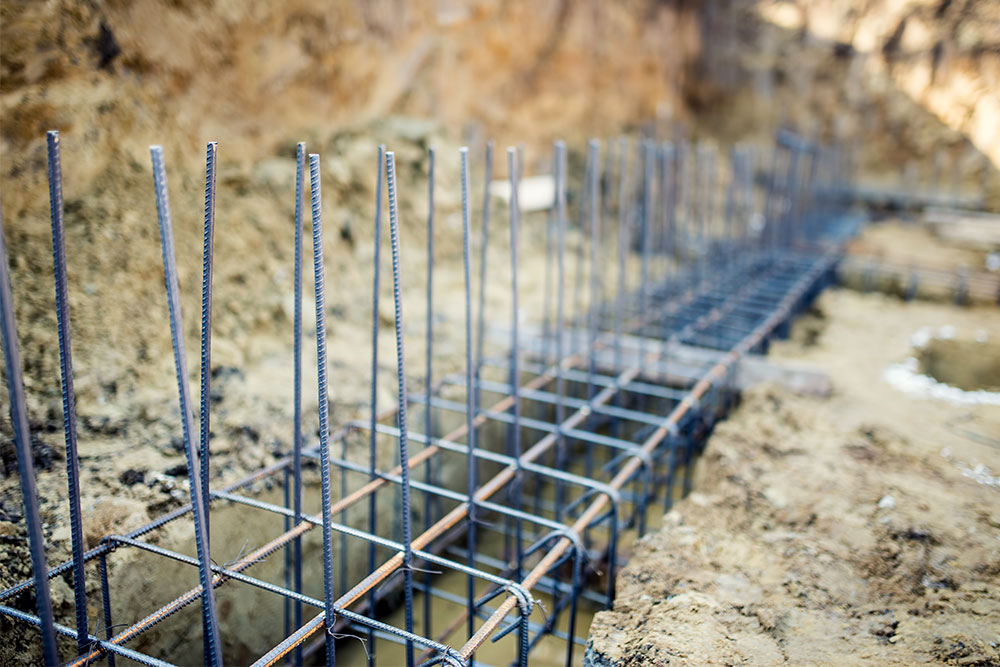
Welcome to the intricate realm of foundation engineering – a field that ensures our structures stand tall and unwavering.
When it comes to construction, the only way to build a safe and stable building is to begin from the ground up, quite literally. Foundation engineering is the art of ensuring the building has a solid base and can withstand the stresses brought onto it by its ever-changing natural host.
Whether it’s a towering skyscraper or a cozy family home, the foundation is the main point of contact between a building and nature. Understanding the intricacies of foundation engineering is essential for both professionals in the field and building owners intent on preserving what is likely their most valuable asset.
Foundation issues can arise due to various factors such as changes in soil conditions, minor construction defects or more significant natural events such as earthquakes or flooding. The role of a foundation engineer is to assess the conditions of a site and use their experience and intuition to Identify and address these issues effectively.
Structural engineers employ advanced techniques such as structural analysis, inspection and even sonar to assess the condition of existing foundations and propose effective solutions.
1.2 The Importance of Foundation Engineering in Residential and Commercial Buildings
Your building foundation is the main point of interaction between the built form and nature. Foundation engineering is really the art of making this dynamic relationship work over time.
As with any relationship, the conditions often change compared to that of the initial interaction. Today, foundation engineer’s are not only focussed on designing new structures, but are skilled at effecting repairs and retrofitting custom solutions to extend your buildings longevity.
If you notice some minor defects or changes in your building’s structure there is no need to panic. Simply contact your local structural engineer and request an inspection. They’ll be sure to have an ideal solution, and it won’t even cost you a fortune.
Preserving Value
Your building is likely your most valuable fixed asset and can certainly be the most expensive to maintain. The best way to preserve the value of this asset is to continuously monitor the structure and effect repairs as soon as problems start to appear.
This is especially true for Engineering foundation repair solutions as there are several inexpensive options available for foundation design and repair work, however once the problem escalates to having a serious impact on the structure, you may be stuck with a significant structural repair job on your hands, or worse.
In the case of structural integrity, things can get much worse, for example total structural failure or collapse, which will have a major negative impact on the value of your building.
What Does a Foundation Actually Do?
Think of a foundation as the unsung hero of your home. It’s the critical connection between your house and the ground it rests on, working tirelessly beneath the surface. While we focus on paint colors and kitchen layouts, the foundation is quietly managing immense forces to keep everything safe and stable. Its main job is to support the entire weight of the structure—from the roof and walls down to the furniture and people inside—and transfer that massive load safely into the earth. Without a solid foundation, a building is just a house of cards waiting for a slight breeze.
But a foundation does more than just bear weight. It also acts as a shield, protecting the structure from ground moisture and the constant movement of the soil. In Colorado, for example, expansive soils swell and shrink with moisture changes, and the freeze-thaw cycle can exert incredible pressure. A well-designed foundation anticipates and counteracts these forces, anchoring the home and preventing shifts that could cause serious structural damage. This is why professional foundation engineering isn’t just a preliminary step in construction; it’s the bedrock of a safe and long-lasting home.
Core Purpose and Requirements
So, what’s on a foundation’s daily to-do list? Its primary purpose is to distribute the building’s load over a large area, ensuring the underlying soil isn’t overwhelmed. Imagine trying to stand in soft mud with high heels versus snowshoes—the foundation acts like snowshoes for your house. It must also provide a perfectly level and stable base for construction to begin. This ensures that walls are straight, floors are even, and the entire structure is geometrically sound from the ground up.
Beyond that, a foundation is required to anchor the building against lateral forces like wind, floods, and seismic activity. It holds the structure firmly in place, preventing it from sliding or overturning. Crucially, it must also be designed to manage settlement. All buildings settle over time, but a properly engineered foundation ensures this happens uniformly across the entire structure. Uneven settling is what leads to cracked walls, sticking doors, and other signs of distress that often require a forensic structural engineer to diagnose and resolve.
1.3 Roles of Structural Engineers in designing different types of footings
A Structural engineer plays a pivotal role in foundation design, employing their expertise to create a robust and resilient foundation system. From assessing soil conditions to determining suitable foundation types, their contributions are invaluable.
A foundation engineer conducts thorough analyses to ensure the proposed foundation system meets all necessary criteria for stability and safety. This involves assessing the anticipated loads, conducting soil testing, and considering any site-specific challenges.
By leveraging their extensive experience and expertise, engineers develop robust foundation designs capable of withstanding the test of time.
Key Responsibilities of a Foundation Engineer
A foundation engineer is a specialized type of civil engineer whose primary focus is ensuring a structure has a strong, stable, and safe base. Think of them as the ultimate guardians of your building’s stability. Their work starts long before any concrete is poured. They begin by investigating the ground conditions of a site, analyzing the soil and rock to understand exactly what the building will be sitting on. This initial analysis is critical for everything that follows.
Once they understand the site, they design the most appropriate foundation system. This could be a shallow footing for a new home or a complex system of deep piles for a large commercial building. They work closely with architects, contractors, and other engineers to create detailed plans and reports. During construction, a foundation engineer will often oversee the work to ensure their designs are executed correctly and that all safety protocols are followed, making sure the final product is sound and secure.
Qualifications and Skills of a Professional Engineer
When you hire a foundation engineer, you’re trusting them with the structural integrity of your property, so it’s important to know they have the right qualifications. A professional foundation engineer must have a Bachelor’s degree in Civil or Geotechnical Engineering, and many pursue a Master’s degree for more advanced knowledge. More importantly, they are required to have a Professional Engineer (PE) license, which is a legal credential ensuring they have met rigorous standards of competence and ethics.
Beyond education and licensing, a qualified engineer needs several years of hands-on experience in foundation design and analysis. They should be skilled at interpreting ground data and using sophisticated software to model and design foundation systems. Strong project management skills and meticulous attention to detail are also essential, as they ensure every aspect of the foundation work is planned and executed perfectly. When you need a structural inspection, verifying these qualifications ensures you’re getting a true expert.
1.4 Types of Foundations for Different Soil Conditions
Different soil conditions require different types of foundations to ensure structural integrity. Spread footing, shallow foundation, and deep foundation such as a pile foundation are among the common types utilized in construction projects.
Different types of foundations are employed based on soil conditions and project specifications. Spread footings, shallow foundations, and deep foundations such as pile foundations are among the common types utilized.
Each foundation type is designed to distribute loads efficiently and prevent issues like differential settlement, which can compromise the structural integrity of buildings.
1.5 Key Considerations in residential foundation engineering
Whether it’s a spread footing, a shallow foundation, a deep foundation or a combined footing, the structural design involves various considerations. These include soil properties, building load requirements, and environmental factors. a Structural engineer will conduct thorough analyses to develop foundation systems capable of withstanding anticipated loads and environmental challenges.
Foundation engineering encompasses an important aspect in the stability and safety of structures. Residential and commercial buildings alike require meticulous planning and execution of a foundation system to withstand loads and environmental factors.
Structural engineers play a pivotal role in this process, employing their expertise to design suitable foundation elements tailored to each unique project.
1.6 Soil Properties and Their Influence on Foundation Engineering
Soil properties play a crucial role in foundation engineering, influencing the design and performance of a foundation system. Factors such as soil type, bearing capacity, and moisture content must be carefully evaluated to ensure the stability and longevity of structures.
The choice of foundation is heavily influenced by soil properties, including bearing capacity, soil type, and moisture content.
Geotechnical engineering plays a crucial role in analyzing soil characteristics and determining suitable foundation designs. Factors such as project location, environmental conditions, and anticipated loads also inform the foundation design process.
Why Soil Testing is a Non-Negotiable First Step
Think of it this way: you wouldn’t build a house without a blueprint, so why would you build on land you know nothing about? Skipping a soil test is a huge gamble. The ground beneath your project isn’t just dirt; it’s a complex mix of materials with unique properties. A professional soil analysis is the only way to understand what you’re working with. It reveals critical information like soil type, its bearing capacity (how much weight it can safely support), and moisture levels. This data is the foundation of a good design, helping prevent costly issues like cracking, uneven settling, or even structural failure down the road.
The findings from a soil test directly guide your engineer in creating a foundation perfectly suited for your site. For example, the expansive clay soils common in the Denver area behave very differently from sandy or rocky soils. A geotechnical report gives your foundation engineer the precise information needed to choose the right foundation type, whether it’s a shallow system or a deep one with piers. This isn’t just about following regulations; it’s about investing in the long-term safety and stability of your building, ensuring it stands strong for decades.
Section 2: Designing Suitable Foundations for New Buildings
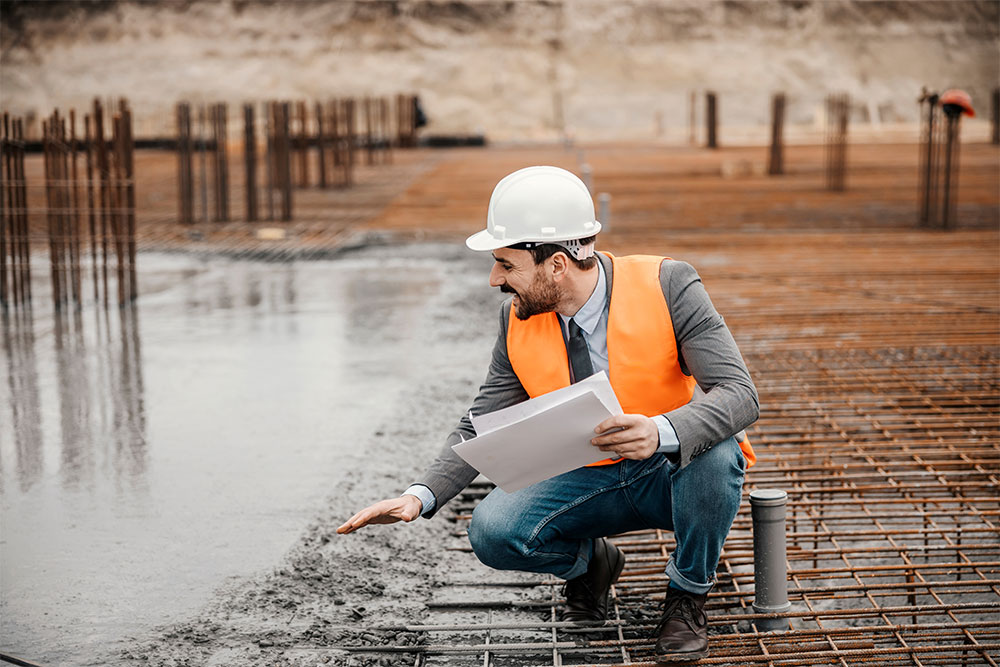
2.1 Introduction to Foundation Design
In the intricate landscape of construction, stability and safety are rooted in the depths of foundation design. Foundation engineering, the bedrock of structural integrity, ensures that our buildings withstand the tests of time and environment.
Foundation design is a critical phase in the construction process, laying the groundwork for the structural integrity of buildings. Various factors, including soil properties, project requirements, and environmental conditions, must be carefully considered to develop a suitable foundation system.
2.2 Factors Influencing Foundation Design
Navigating the complexities of foundation design requires a keen understanding of various factors that influence structural stability. From soil properties to project specifications, every aspect plays a crucial role in determining the most suitable foundation system.
Soil Bearing Capacity
Think of soil bearing capacity as the ground’s strength. It’s a measure of how much weight the soil can safely support before it starts to shift or compress. Every building, from a small garage to a multi-story office, transfers its entire weight down through the foundation and into the earth. The foundation’s job is to spread that load out so the pressure on the soil never exceeds its bearing capacity. If the load is too heavy for the soil underneath, the ground will fail, causing the building to settle unevenly. This can lead to cracked walls, sloping floors, and serious structural damage over time.
This is why understanding the specific soil conditions on a property is a non-negotiable first step in any construction project. A foundation engineer will analyze the soil to determine its strength. This analysis dictates the type and size of the foundation required to ensure the structure remains stable and secure for decades. It’s all about creating a foundation that works in harmony with the ground it rests on, rather than fighting against it.
Environmental Factors: Frost Heave and Scour
Beyond the soil’s inherent strength, we also need to consider how the environment can affect it. Here in Colorado, one of the biggest concerns is frost heave. This happens when water in the soil freezes during the winter. As water turns to ice, it expands, pushing the soil and anything in it—like your foundation—upward with incredible force. When the ground thaws, it settles back down, but this movement can be uneven and leave parts of the foundation unsupported. Over several freeze-thaw cycles, this can cause significant damage.
Another environmental risk is scour, which occurs when moving water washes away the soil supporting a foundation. While it’s a major concern for bridges, it can also affect homes with poor drainage, on steep slopes, or near creeks that might flood. Both frost heave and scour can compromise a foundation’s stability. A skilled engineer will account for these local environmental risks, designing foundations that sit below the frost line or incorporating drainage solutions to protect the structure. This is where a structural inspection can identify potential risks before they become major problems.
2.3 Types of Foundations and Their Applications
Diverse soil conditions demand tailored solutions in foundation design. Spread footings, shallow foundations, and deep foundations such as pile foundations each serve specific purposes, distributing loads efficiently and ensuring structural resilience.
Deep Foundations: How Pile Systems Work
In regions with challenging soil conditions, deep foundations emerge as stalwart solutions. Pile foundations, driven deep into the earth, provide stability by transferring building loads to more competent soil layers, safeguarding structures against settlement and instability.
Other Deep Foundation Systems
While pile foundations are a common solution, they’re just one part of the deep foundation family. Other systems, like drilled shafts (often called caissons) and piers, also play a critical role in providing stability on challenging sites. Think of these as custom-built columns that extend deep into the ground, bypassing weak or expansive surface soils to rest on solid bedrock or a more stable soil layer. This method ensures the weight of your building is transferred safely, preventing the kind of settlement or movement that can lead to serious structural problems.
The choice between piles, drilled shafts, or piers isn’t arbitrary; it’s based on a detailed professional analysis of your site. Drilled shafts, for example, are created by boring a large hole into the ground, which is then filled with concrete and reinforced with steel. This method is often ideal for supporting very heavy loads or when dealing with specific soil types. Determining the right deep foundation system requires a thorough geotechnical investigation and the expertise of a foundation engineer who can design a solution that guarantees long-term stability for your structure.
Shallow Foundations: Spread and Combined Footings
Where soil conditions permit, shallow foundations offer practical alternatives. Spread footings and combined footings disperse loads over a broader area, mitigating soil pressure and minimizing settlement risks, thus ensuring the stability of structures.
Modern Shallow Foundation Solutions
When the soil near the surface is strong enough to support a structure, a shallow foundation is often the most practical and cost-effective choice. These foundations are typically buried just a few feet deep and work by spreading the building’s weight over a wide area of soil, ensuring stability. Common examples you might see are spread footings, which are concrete strips or pads that support walls and columns, and slab-on-grade foundations, where a single layer of concrete serves as both the foundation and the ground floor. Choosing the right type depends on your specific project, from a new home build to a simple garage addition. An experienced engineer will analyze the soil and your building plans to recommend the best solution.
A Look at Historic Foundation Methods
It’s interesting to see how far foundation design has come. For centuries, builders worked with the materials they had on hand, leading to some creative solutions. Historic foundation methods included everything from earthfast construction, where wooden posts were placed directly into the ground, to rubble-trench foundations filled with loose stones. Many older homes were built on simple stone foundations, with walls made of dry-stacked stones or stones held together with a basic mortar. While these techniques were ingenious for their time, modern engineering provides the analysis and materials needed to create foundations that are far more durable and resilient against soil movement and environmental changes.
Concrete Slabs: Exploring Your Options
Concrete slabs are a fundamental element in construction, providing sturdy foundations for a wide range of structures. Two primary types of concrete slabs are commonly used: slab on grade and structural slabs. Each type serves specific purposes in construction projects, offering distinct advantages and applications.
Slab-on-Grade Foundations
A slab on grade, as the name suggests, is a concrete slab that is directly poured onto the ground, typically without any basement or crawlspace beneath. This type of foundation is commonly used in residential construction, where the ground is sufficiently compacted to support the weight of the structure. Slabs on grade offer simplicity and cost-effectiveness, providing a stable base for buildings while minimizing excavation and construction time. They are well-suited for flat sites with stable soil conditions, where frost heave and expansive soil movement are not significant concerns.
Structural Slab Foundations
In contrast to slabs on grade, structural slabs are designed to support heavy loads and provide additional structural strength to a building. These slabs are typically thicker and reinforced with steel bars to withstand the stresses imposed by the building’s weight and usage. Structural slabs are commonly used in commercial and industrial construction, where larger spans and heavier loads are prevalent. They are essential for supporting multistory buildings, bridges, parking garages, and other structures where enhanced structural integrity is required.
A Breakdown of Structural Slab Types
- Flat Plate Slab
- Flat Slab
- Waffle Slab
- Ribbed Slab
- Two-way Slab
- One-way Slab
- Post-Tensioned Slab
- Prestressed Slab
Each type of structural slab offers unique advantages in terms of load-bearing capacity, construction complexity, and cost-effectiveness. The choice of structural slab depends on factors such as building design, budget constraints, and project requirements
2.5 Foundation Walls
Now that your foundation is in, what happens next? foundation walls stabilize the structure against lateral pressures exerted by surrounding soil. The earth around the building is constantly moving as the earth’s surface changes over time. These changes can be over hundreds of years or as abrupt as a floor or an earthquake.
Foundation design is an art and a science, requiring a delicate balance of technical expertise and creative problem-solving. By meticulously analyzing soil conditions, anticipating loads, and leveraging innovative design techniques, structural engineers craft foundation systems that adapt to the conditions around them. This may not be a perfect science but don’t fret, there are many ways to fix and enhance the strength of existing foundations.
Foundation Construction and Maintenance Best Practices
Tips for a Successful Concrete Pour
A great foundation design is only as good as its execution. The construction phase is where plans become reality, and one of the most critical moments is the concrete pour. For concrete to cure correctly and reach its maximum strength, it should ideally be poured when the temperature is between 40ºF and 90ºF. If it’s too cold, the hardening process slows down significantly; if it’s too hot, the water can evaporate too quickly, leading to cracks and a weaker structure. An experienced contractor will always monitor the forecast to find that sweet spot, ensuring your home is built on the strongest possible base from day one.
Protecting Your Foundation for the Long Haul
Once your foundation is built, the work isn’t over. Think of it as a long-term commitment that requires ongoing attention to keep your home safe and stable. The biggest threats to any foundation are water and the immense pressure from the surrounding soil, which can cause shifting and cracks over time. Proactive maintenance is your best defense against costly future repairs. This means managing water around your property and keeping an eye out for changes. If you notice new cracks or dampness in your basement, it’s always best to consult with a professional who specializes in foundation engineering to assess the situation before it gets worse.
The Role of Proper Drainage
Good drainage is your foundation’s best friend. When water is allowed to pool against your foundation walls, it creates what’s known as hydrostatic pressure. This constant force pushes against the concrete and can eventually lead to cracks, leaks, and even bowing walls. A well-designed drainage system, which often includes components like gravel and weep tiles (also known as French drains), directs water away from your home. This system relieves the pressure on your foundation walls, which are designed to stabilize your home against the lateral forces of the surrounding earth. Keeping that soil from becoming waterlogged is essential for maintaining your home’s structural integrity.
Installing Vapor Barriers
Another key element in protecting your foundation is a vapor barrier. This is a simple but highly effective layer of waterproof material, usually a durable plastic sheeting, that is installed before the concrete slab is poured. Its job is to block moisture from the ground from wicking up through the porous concrete and into your home. Without a vapor barrier, this slow migration of moisture can lead to a damp basement or crawlspace, creating the perfect environment for mold and mildew. This not only affects your home’s air quality but can also degrade building materials over time. A properly installed vapor barrier is a crucial step for a dry and healthy foundation.
Section 3: Inspecting and Assessing Existing Foundations
3.1 Introduction to Foundation Inspection
Peering beneath the surface, foundation inspection unveils the hidden truths of structural integrity. In the ever-evolving landscape of construction, the careful scrutiny of existing foundations is paramount to ensuring the safety and longevity of buildings.
Foundation inspections involve a comprehensive evaluation of the structure’s foundation and surrounding soil conditions.
A Structural engineer utilizes various techniques, including visual inspections, geotechnical testing, and structural analysis, to assess the condition of the foundation. Signs of foundation issues, such as cracks in walls, uneven floors, or doors/windows that no longer close properly, may indicate underlying problems.
3.2 Common Foundation Issues and Causes
In the intricate dance between structure and soil, foundation issues may arise due to a myriad of factors. Inadequate design, changes in soil conditions, or construction defects can manifest as settlement, cracking, or moisture-related damage, posing threats to structural stability and integrity.
3.3 Structural Assessment Techniques
Unlocking the secrets buried beneath the earth’s surface requires a blend of artistry and science. Structural engineers deploy advanced assessment techniques, including structural analysis and non-destructive testing, to unveil the hidden vulnerabilities and intricacies of existing foundations.
3.4 Identifying Signs of Foundation Problems
In the silent language of structural distress, subtle cues often reveal profound truths. From hairline cracks to uneven settlement, identifying signs of foundation problems requires a keen eye and a deep understanding of structural behavior, enabling engineers to diagnose underlying issues accurately.
Cracks: What to Look For
Spotting a crack in your wall or foundation can be unsettling, but it’s important to know what you’re looking at before you worry. Not all cracks signal a major problem. Pay attention to the size, shape, and direction. Small, hairline cracks in drywall are often the result of normal, minor settling. However, larger cracks that are wider than a quarter-inch, run in a zig-zag pattern through brickwork, or appear horizontally along your foundation walls are more concerning. These can indicate significant pressure or movement. A professional structural inspection is the only way to truly diagnose the cause and determine if a repair is needed.
Other Warning Signs: Sticking Doors and Bowing Walls
Foundation issues don’t always show up as obvious cracks. Sometimes, the signs are more subtle. Have you noticed doors that suddenly stick or windows that are difficult to open and close? This can happen when foundation settlement warps their frames. Another key indicator is uneven or sloping floors, which you might notice as a slight tilt when you walk across a room. More serious signs include foundation walls that appear to be bowing inward or bulging outward. These symptoms suggest significant external pressure on your foundation. If you see any of these changes, it’s best to have an expert take a look. A foundation engineer can assess the situation and provide a clear path forward.
3.5 Differential Settlement: Causes and Consequences
In the delicate equilibrium between structure and soil, the phenomenon of differential settlement looms as a silent threat. Differential settlement, characterized by uneven settling of the foundation, can lead to structural instability and damage, posing significant risks to the safety and longevity of buildings.
3.6 Proposing Solutions to Damaged Foundations
In the crucible of adversity, innovation and expertise converge to forge solutions that stand the test of time. Structural engineers, armed with extensive experience and technical prowess, develop remediation plans tailored to the specific needs of each project, addressing underlying issues and restoring structural integrity.
Foundation issues can arise due to various factors, including inadequate design, changes in soil conditions, or construction defects.
Identifying and addressing these issues promptly is essential to prevent further damage to the structure. Structural engineers employ advanced techniques such as structural analysis and inspection to assess the condition of existing foundations and propose effective solutions.
In conclusion, inspecting and assessing existing foundations is essential for identifying and addressing potential structural problems.
By understanding the common issues affecting foundations and proposing tailored solutions, structural engineers play a vital role in ensuring the safety and stability of existing buildings.
With proper assessment and professional expertise, damaged foundations can be restored to their original condition, preserving the integrity of the structure for years to come.
Hiring an Expert for Your Foundation Inspection
When you suspect a problem with your foundation, the first step is to call in a professional. A foundation inspection is a thorough evaluation of your home’s structure and the surrounding soil conditions. It’s not just a quick look around; a qualified structural engineer uses a combination of visual checks, technical analysis, and sometimes even geotechnical testing to get a complete picture of your foundation’s health. They know exactly what to look for, from subtle cracks to signs of soil shifting. This expert assessment is crucial for accurately diagnosing any issues and determining the right course of action, ensuring you don’t waste money on unnecessary repairs. Getting a professional structural inspection provides the clarity and peace of mind you need to move forward confidently.
Understanding the Costs of Foundation Work
Let’s talk about one of the biggest concerns for any homeowner: the cost. Foundation work can feel like a huge, unpredictable expense, but understanding the potential costs can help you plan and budget effectively. The price tag can vary dramatically depending on what you need, whether it’s a simple inspection, a full foundation for a new build, or extensive repairs. Minor fixes might only set you back a few hundred dollars, while major projects can run into the tens of thousands. It’s important to remember that your home’s foundation is what keeps everything else standing strong. Investing in professional, high-quality work isn’t just a repair cost—it’s an investment in your property’s safety, stability, and long-term value. Getting clear estimates from a trusted engineering firm is the best way to know what to expect.
Building a New Foundation: What to Budget
If you’re planning a new construction project, the foundation is one of the first and most critical budget items. The cost depends heavily on the size of the home, the type of foundation you choose (like a slab, crawl space, or basement), the local soil conditions, and even the climate. On average, you can expect the cost to build a standard house foundation to be around $9,500, but this figure can shift based on the complexity of the project. A professional engineer can help you design a foundation that is both effective for your specific site and efficient in terms of cost. Working with an experienced team on your new home build ensures this essential first step is done right, setting your project up for success from the ground up.
Excavation and Permit Costs
When budgeting for a new foundation, don’t forget to account for the associated costs of excavation and permits. Before any concrete can be poured, the site needs to be prepared, which involves digging and clearing the land. For a simple slab foundation, excavation costs typically run about $2 to $3 per square foot. You’ll also need to secure the proper building permits from your local municipality, which can add another $1,000 to $2,000 to your budget. These are non-negotiable steps in the construction process, and factoring them in early helps you create a more realistic and comprehensive financial plan for your project. An experienced firm can often help you with the permitting process, making it a much smoother experience.
The Cost of a Professional Foundation Inspection
A professional foundation inspection is a relatively small expense that can save you a fortune down the road. The average cost for a thorough inspection by a structural engineer is about $600, with prices generally ranging from $300 to $1,000. Some engineers may charge an hourly rate, which can be anywhere from $100 to $500 per hour, and most inspections take one to two hours to complete. This fee covers the engineer’s time, their deep expertise, and a detailed report outlining their findings and recommendations. For homeowners, real estate agents, or contractors, this report is an invaluable tool for making informed decisions about a property. It’s a smart, proactive investment in understanding the true condition of a home’s structural base.
Foundation Repair Costs: From Minor to Major
The cost of foundation repair can range from a minor expense to a major investment, depending entirely on the severity of the problem. Small, simple fixes like sealing minor cracks or leaks might cost between $250 and $800. However, more significant issues require more intensive solutions. If your foundation has settled and needs underpinning with piers, or if walls are bowing and require stabilization, the costs can climb into the thousands. In the most extreme cases, a full foundation replacement could cost anywhere from $20,000 to $100,000. This is why early detection is so important. Addressing a small problem found during an inspection can prevent it from becoming a massive, costly headache later on. A foundation engineer can provide precise solutions that address the root cause, ensuring a lasting repair.
Frequently Asked Questions
I’ve noticed some cracks in my drywall. Does this automatically mean my foundation is failing? Not at all. It’s completely normal for a house to settle over time, which can cause small, hairline cracks in the drywall. The real clues are in the details. You should pay more attention to cracks that are wider than a quarter-inch, run in a zig-zag pattern up a brick wall, or appear horizontally along your foundation. These are often signs of pressure or movement that warrant a closer look from a professional.
Besides cracks, what are some other signs that I should call a foundation engineer for an inspection? Your house has other ways of telling you something is wrong. One of the most common signs is having doors or windows that suddenly start to stick or become difficult to open. This can happen when foundation movement warps their frames. You might also notice floors that feel sloped or uneven as you walk across them. More serious indicators include foundation walls that are visibly bowing inward or bulging outward, which suggests significant pressure from the surrounding soil.
Why is a professional soil test necessary before building a new foundation? Think of it like this: you wouldn’t choose a shoe size without measuring your foot. A soil test is the measurement for your foundation. The ground isn’t uniform; it has unique properties that affect how much weight it can safely support. A soil test gives your engineer the precise data needed to design a foundation that is perfectly suited to your specific piece of land. Skipping this step is a gamble that can lead to uneven settling and costly structural problems down the road.
What’s the difference between a general home inspection and a structural engineering inspection? A general home inspector is a jack-of-all-trades who provides a broad overview of the entire property, from the roof to the plumbing. A structural engineer is a specialist. When you hire one for an inspection, they perform a deep and focused analysis of your home’s structural system, particularly the foundation. They don’t just spot a symptom like a crack; they diagnose its root cause and create a detailed plan to solve it.
What factors influence the cost of foundation repair? The cost of a repair is tied directly to the complexity of the solution. Sealing a few minor cracks is a relatively simple and inexpensive fix. However, if the problem is more significant, the solution will be more involved. For example, stabilizing a bowing wall or lifting a section of the foundation that has settled requires specialized equipment and expertise, which naturally comes with a higher price tag. The final cost depends entirely on the specific repair strategy needed to ensure a permanent fix.
Key Takeaways
- Professional analysis is the essential first step: Before building or repairing, a structural engineer must evaluate your property. Soil testing and a thorough inspection provide the critical data needed to design a lasting solution and prevent future problems.
- A stable foundation is tailored to its environment: The right foundation design is not a one-size-fits-all solution. It must be specifically engineered for your site’s soil type, building load, and local climate factors to ensure long-term stability.
- Your house communicates signs of stress: Learn to recognize the early warnings of foundation issues, such as zig-zag cracks in brick, doors that suddenly stick, or bowing walls. Addressing these symptoms promptly with an expert inspection is the key to avoiding more extensive repairs.
