
That persistent puddle in your yard after it rains? It might seem like a small annoyance, but it could be a red flag for a much larger issue. Improper water flow can threaten your home’s structural integrity, leading to costly foundation repairs and landscaping problems. While your first instinct might be to call a landscaper, the real solution often lies in a more specialized field. Drainage engineering is the science of managing surface and subsurface water across your entire property. It’s about creating a comprehensive plan to direct water safely away from your home, ensuring your foundation stays dry and your property remains stable for years to come.
Understanding the Vital Role of Drainage Engineers in Building Sustainable Communities
Navigating the intersections of civil engineering, sustainability, and community resilience, drainage engineering is a field of critical importance that often remains overlooked.
Understanding Urban Impacts
Urbanization brings about significant changes to landscapes, introducing impervious surfaces that disrupt natural water cycles and ecosystems. This transformation leads to increased runoff and flooding risks, highlighting the critical need for effective drainage solutions.
Drainage engineers play a pivotal role in mitigating these risks by designing and implementing robust drainage systems. Their expertise ensures that urban developments are resilient to water-related disasters while minimizing adverse impacts on the environment.
As our populations increase and our climate changes, higher populations of people are also migrating towards accessible water sources which can cause geopolitical tensions to rise. An Example of this is in the Colorado river basin, where we have seven states contesting the allocation of the water in this river.
Read more here: https://www.latimes.com/california/story/2023-02-07/comparing-two-competing-proposals-for-colorado-river-cuts
The Health and Environmental Benefits of Drainage Engineering
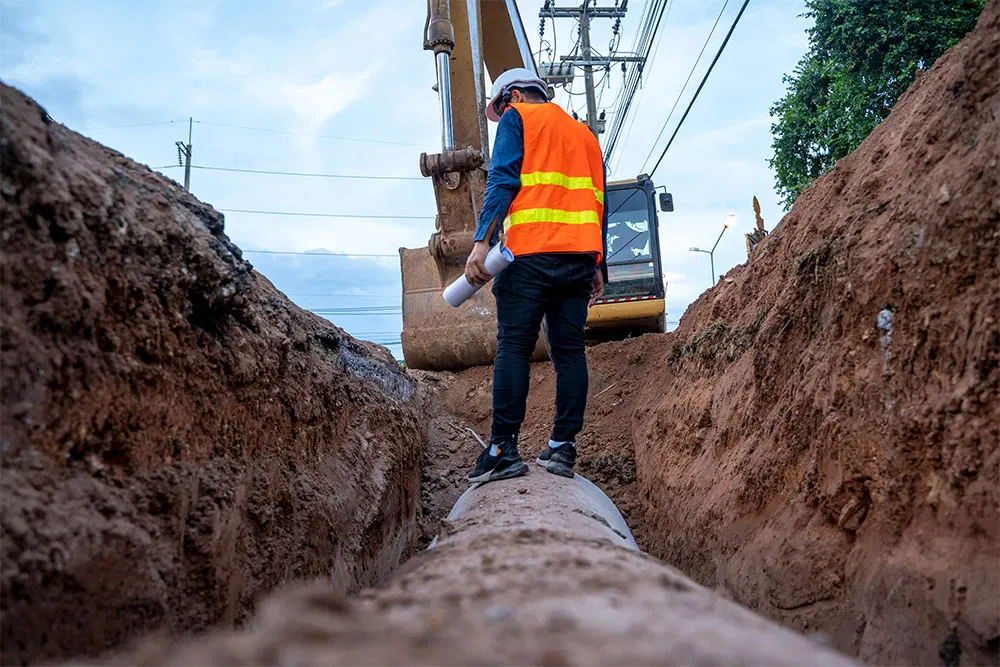
Drainage engineering tackles the challenges posed by urbanization, (which often leads to increased pollution and altered water flow patterns impacting environmental elements and species). It focuses on managing water in urban areas to prevent the destruction of natural habitats and waterways and the sustainable management of water resources.
This involves designing sustainable drainage systems that capture, convey, and treat stormwater runoff, reducing pollution levels, minimizing flooding risks, and maintaining ecological balance within urban landscapes.
By integrating green infrastructure, stormwater management techniques, and water quality improvement measures, drainage engineering aims to harmonize urban development with environmental conservation, promoting sustainable practices that benefit both human communities and natural ecosystems.
Drainage Engineer vs. Plumber: Clarifying the Roles
While both deal with water, the difference between a drainage engineer and a plumber comes down to scale and scope. A plumber is your go-to for immediate, localized issues inside your home—think a clogged drain, a leaky pipe, or a running toilet. Their expertise lies in repairing and maintaining the internal plumbing system that brings water in and takes waste out. A drainage engineer, however, operates on a much broader scale. As specialized civil engineers, they design comprehensive systems to manage water flow across your entire property to prevent major problems like flooding and erosion. Their work is crucial for protecting your home’s structural integrity, as improper drainage can lead to serious issues with your home’s base. This is why expert foundation engineering and site planning are essential from the start.
A Look Inside the Drainage Engineering Industry
Drainage engineering is a specialized branch of civil engineering focused on managing surface water runoff to prevent flooding, erosion, and water contamination.
It encompasses the design, construction, and maintenance of drainage systems, including stormwater drains, culverts, retention ponds, and green infrastructure.
Drainage engineers utilize principles of hydrology, hydraulics, geotechnical engineering, and environmental science to develop sustainable solutions that balance the needs of communities with the preservation of natural ecosystems.
While a plumber or technician will focus on the implementation of designs, it is up to a drainage engineer to keep the entire network in mind and apply their skills to create sustainable infrastructure.
A Niche and High-Tech Profession
When you hear “drainage,” your mind might jump to simple plumbing issues. However, drainage engineering is a far more complex and high-tech field. It’s a specialized branch of civil engineering that focuses on the big picture: managing surface water to prevent widespread issues like flooding, erosion, and contamination. This isn’t about snaking a drain; it’s about designing the systems that protect entire communities. Modern drainage work relies on advanced technology to create these solutions, often without ever coming into direct contact with waste.
Drainage engineers are multidisciplinary experts. They use principles from hydrology, hydraulics, and even environmental science to develop sustainable solutions. The goal is to create systems that meet the needs of a growing community while also preserving the natural ecosystem. It’s a delicate balance that requires a deep understanding of how water interacts with the built environment. This expertise is crucial for everything from new commercial developments to ensuring a new home addition doesn’t create water problems for the property.
Job Security and Satisfaction in the Field
As long as it rains and we continue to build and live in communities, there will be a critical need for drainage engineers. As infrastructure ages and urban areas expand, the demand for skilled professionals to design, upgrade, and maintain these vital systems only grows. This creates a career path with incredible stability and opportunities for growth. It’s a profession that is fundamental to the safe and sustainable development of our towns and cities.
Beyond job security, this career offers a unique sense of satisfaction. There’s a tangible impact in helping people solve serious drainage problems, whether it’s protecting a family’s home from flooding or designing a system that prevents a commercial property from water damage. Drainage engineers provide peace of mind and play a direct role in keeping communities safe and functional. This work offers a strong sense of purpose, knowing that your skills are essential to protecting both people and the environment they live in.
Drainage Engineer Services:
Site Surveys:
A Drainage engineer conducts comprehensive site surveys to assess topography, soil composition, and existing drainage infrastructure, providing essential data to ensure water quality to surrounding areas remains uncompromised.
One of the most cutting edge methods of preserving our most precious natural resource is recharging aquifers. This method has, however, shown mixed results across various projects. You can read more about the recharging of aquifers in california here.
Hydrological Analysis:
Utilizing advanced modeling techniques, and hydro-science, a drainage engineer analyzes rainfall patterns, surface runoff, and water flow dynamics to determine the most suitable drainage for any portion of land.
Design and Planning:
a Drainage engineer develops detailed drainage plans tailored to the specific needs and challenges of each project, incorporating elements such as stormwater management systems, retention ponds, and erosion control measures.
Permitting Assistance:
Drainage engineers assist clients in obtaining necessary permits and approvals from regulatory agencies, ensuring compliance with local, state, and federal regulations governing drainage projects.
Construction Oversight:
Drainage engineers oversee all aspects of construction, from site preparation and excavation to installation of drainage infrastructure, ensuring that projects are completed safely, efficiently, and according to design specifications.
Quality Control and Assurance:
Drainage engineers conduct rigorous quality control inspections to verify the integrity and functionality of civil engineering systems, identifying and addressing any deficiencies or deviations from the design.
Maintenance and Rehabilitation:
Drainage engineers develop comprehensive plans to ensure the long-term performance and reliability of drainage infrastructure, conducting regular inspections, repairs, and rehabilitation efforts as needed.
Risk Assessment and Mitigation:
Drainage engineers assess the risk of flooding, erosion, and other water-related hazards, developing strategies to mitigate these risks and enhance the resilience of communities and infrastructure.
Green Infrastructure Design:
Drainage engineers incorporate green infrastructure elements such as rain gardens, bioswales, and permeable pavements into drainage designs to enhance water quality, biodiversity, and urban resilience.
Emergency Response Planning:
Drainage engineers develop emergency response plans to help communities prepare for and respond to natural disasters and extreme weather events, minimizing the impact of flooding and other water-related emergencies.
By offering a comprehensive range of services, drainage engineers play a crucial role in safeguarding communities and protecting water resources. They use specialist skills to promote sustainable development in an increasingly complex and interconnected world
Drainage Engineer and Their Role on Projects:
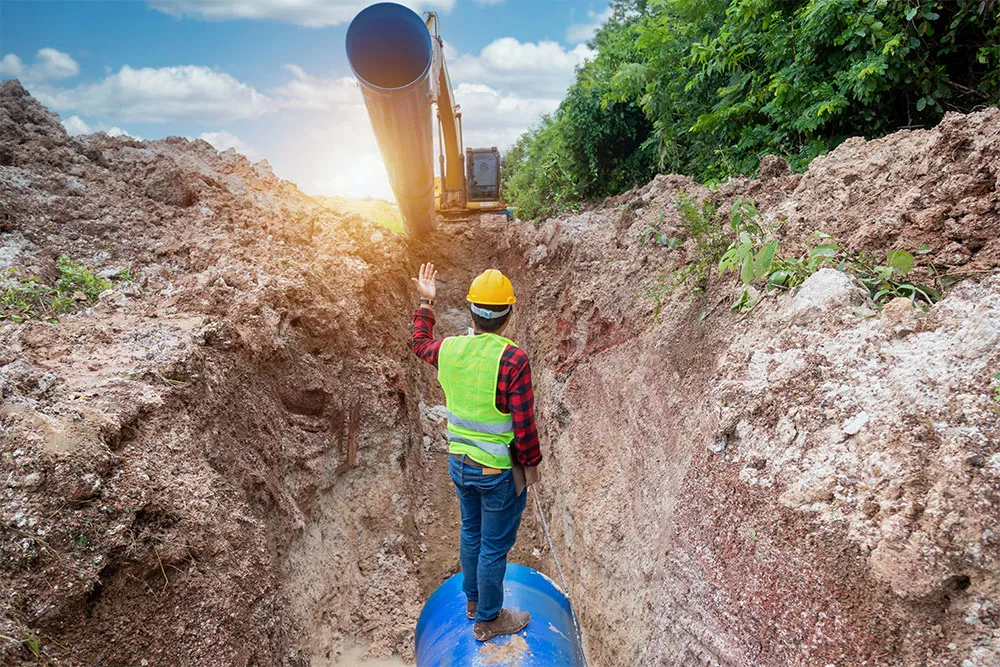
When it comes to managing water flow and drainage, drainage engineers are qualified specialists in designing and surveying drainage systems. Their qualification means they have the necessary skills that allow our use of water to have a positive or at least neutral effect on our natural environment.
Drainage engineers use their skills to carry out a wide range of tasks:
- Complete Engineering Tasks: Drainage engineers handle a variety of engineering tasks on job sites, including drainage, roads, pipeline, and general civil design. This involves assessing site conditions, and ensuring compliance with regulations.
- Assess project requirements: Drainage engineers can assist in developing a thorough project brief that ensures companies, private individuals and governments clearly understand their drainage requirements.
- Design of Drainage Systems: Drainage engineers design both open and closed systems tailored to the specific needs of each project. This includes stormwater management facilities, retention ponds, and temporary drainage structures.
- Utilization of (SUDs): Drainage engineers are experienced in incorporating sustainable features such as balancing/infiltration ponds, soakaways, and attenuation tank systems into their designs to manage surface water runoff effectively.
- Software Proficiency: Drainage engineers are proficient in using design software such as AutoCAD and Micro-drainage to create detailed plans, profiles, and sections for drainage infrastructure.
- Preparation of Consent Applications: Drainage engineers assist in preparing consent applications and liaising with water or drainage authorities to obtain design approval for drainage projects.
- Compliance Management: Drainage engineers ensure compliance with quality, safety, and environmental procedures throughout the project lifecycle.
- Engineering Calculations and Reports: Drainage engineers assist in conducting engineering calculations, computer modeling, and preparing design reports, permitting documents, and contract quantities.
- Infrastructure Planning and Implementation: Drainage engineers are involved in the planning, design, and implementation of drainage and utilities infrastructure across a wide range of projects, including highways, civil works, and utilities.
- Expertise in Stormwater Management: Drainage engineers have expertise in stormwater management design, low impact design (LID), channel restoration, erosion protection, and scour protection, ensuring effective water management and minimizing flood risks.
- Client Interaction and Regulatory Compliance: Drainage engineers interact directly with clients, regulatory authorities, and other stakeholders to ensure project success and compliance with regulations and standards.
In summary, drainage engineers provide a comprehensive range of services aimed at managing water flow, preventing flooding, and ensuring the integrity and sustainability of drainage infrastructure on construction sites. Their expertise and experience are essential for successful project outcomes and environmental stewardship.
Types of Projects:
A drainage engineer is involved in a wide range of projects, from small-scale residential developments to large-scale infrastructure initiatives.
They work closely with architects, urban planners, and environmental scientists to integrate drainage seamlessly into the built environment, ensuring that water resources are managed efficiently and sustainably.
Some common projects include designing stormwater management plans for new subdivisions, retrofitting existing infrastructure to improve water quality, and implementing green infrastructure to mitigate urban heat island effects and enhance biodiversity.
Drainage Engineering: A Career Overview
Professionals find themselves at the forefront of shaping resilient communities and sustainable infrastructure. Employers across various sectors, including government agencies, engineering firms, and construction companies, actively seek skilled drainage engineers to join their teams.
Day-to-day tasks in this field typically involve designing, implementing, and managing drainage systems to mitigate flooding and ensure water quality.
Working for these employers, drainage engineers engage in a range of responsibilities. They analyze project requirements, conduct site surveys, and develop detailed drainage plans tailored to specific needs.
Additionally, they collaborate with surveyors, technicians, and construction teams to oversee the implementation of these plans, ensuring projects are completed efficiently and effectively.
How to Become a Drainage Engineer
For those interested in a career that combines problem-solving with environmental stewardship, becoming a drainage engineer is a fantastic choice. It’s a path that requires a solid educational foundation and a specific set of skills to succeed.
Educational Paths and Alternative Routes
The most direct path to becoming a drainage engineer is through a university education. Typically, this involves earning a bachelor’s degree in civil engineering or a closely related field. While in school, focusing your coursework on subjects like hydrology (the science of water), hydraulics, and environmental engineering will give you a strong foundation for this specialized career. This academic background provides the essential theoretical knowledge needed to design complex systems that manage water effectively and protect our communities.
However, a four-year degree isn’t the only way to enter the field. Some people find their way through college programs offering associate’s degrees or technical certifications, apprenticeships with engineering or construction firms, or by gaining relevant work experience and applying directly for technician roles. These alternative routes can be a great way to get hands-on experience while you learn, eventually leading to more advanced positions as you build your skills and credentials over time.
Licensing and Certifications
While a degree gets your foot in the door, professional licensure is what really solidifies your career as an engineer. The most significant credential is the Professional Engineer (PE) license. Earning a PE license is a rigorous process that involves graduating from an accredited engineering program, passing the Fundamentals of Engineering (FE) exam, gaining several years of supervised work experience, and finally passing the Principles and Practice of Engineering (PE) exam.
Holding a PE license demonstrates a high level of competence and ethical commitment. It’s often a requirement for engineers who want to take on senior roles, manage projects, or sign off on official engineering plans. For clients, hiring a firm with licensed Professional Engineers provides peace of mind, knowing that their project is in the hands of a qualified expert who is held to the highest industry standards.
Key Skills for a Drainage Engineer
Success as a drainage engineer requires a unique blend of technical knowledge and practical skills. A strong aptitude for math, geography, and science is fundamental, as these subjects form the basis of all engineering calculations and environmental assessments. You’ll need sharp analytical thinking to diagnose complex water flow problems and design effective, sustainable solutions. Meticulous attention to detail is also non-negotiable; a small miscalculation in a drainage plan can lead to significant issues like flooding or erosion down the line.
Beyond the technical side, strong communication skills are essential. Drainage engineers must be able to clearly explain their designs and recommendations to clients, contractors, and government officials who may not have an engineering background. They work as part of a larger team, so collaboration and the ability to convey complex information simply and accurately are key to seeing a project through from concept to completion.
Salary and Career Progression
A career in drainage engineering offers a clear path for advancement and competitive compensation, making it an attractive field for aspiring engineers.
Typical Salary for a Drainage Engineer
A career in drainage engineering is not only intellectually rewarding but also financially stable. In the United States, the average salary for a drainage engineer is around $85,000 per year. Of course, this figure can vary quite a bit depending on several factors. Your level of experience plays a huge role, with entry-level positions starting lower and senior engineers with a PE license earning significantly more.
Location is another key factor, as salaries often reflect the cost of living and demand for engineers in a particular region. The type of employer—whether it’s a private consulting firm, a large construction company, or a government agency—can also influence compensation. Overall, it’s a field with strong earning potential that grows as you build your expertise and take on more complex responsibilities.
Career Path and Advancement
The career path for a drainage engineer offers plenty of room for growth. After graduating, you’ll likely start in a junior role, assisting senior engineers with calculations, drafting, and site visits. This is where you gain the practical experience needed to sit for the PE exam. Once you’re licensed, new doors open up. You can advance to positions like Project Engineer or Design Engineer, where you’ll take the lead on specific aspects of a project.
With more experience, you can become a Senior Engineer, managing entire projects and mentoring junior staff. From there, many engineers move into management roles, becoming team leaders or department heads within their firms. The skills you develop are also transferable to other areas of structural engineering and public works. The journey from a recent graduate to a seasoned expert is a challenging but fulfilling one, built on continuous learning and a commitment to creating resilient infrastructure.
Longevity and Inspections.
Moreover, drainage engineers play a crucial role in ongoing maintenance and inspection of drainage systems, identifying and addressing issues to uphold performance standards.
This multifaceted role demands a blend of technical expertise, problem-solving skills, and a commitment to environmental stewardship.
Overall, a career in drainage engineering offers the opportunity to work with diverse employers, engage in meaningful tasks, and contribute to the development of resilient communities through effective water management.
Conclusion:
In conclusion, a drainage engineer is a vital component of sustainable development, ensuring that communities are resilient to the challenges posed by climate change, urbanization, and aging infrastructure.
There is after all no need for humans to have a negative impact on the environment. With the tools currently available and the skills of qualified drainage engineers we can greatly reduce our impact on natural resources.
By effectively managing surface water runoff, drainage engineers help mitigate the risk of flooding, protect water quality, and promote environmental sustainability.
As we continue to confront these challenges, the expertise of drainage engineers will be increasingly indispensable in building resilient communities that can thrive in the face of environmental uncertainty.
Let’s recognize the crucial role of drainage engineers in shaping our world and support their efforts to create a more sustainable future for all.
Frequently Asked Questions
When should I call a drainage engineer instead of a plumber or landscaper? A plumber is your expert for anything related to the pipes inside your house, like a clogged sink or backed-up toilet. A landscaper can help with surface-level solutions, like re-grading a small area of your lawn. You should call a drainage engineer when you’re dealing with a property-wide water problem, such as persistent standing water, erosion, or concerns about water getting too close to your foundation. They look at the entire system to design a comprehensive solution, rather than just addressing a single symptom.
Can a drainage engineer help with a simple soggy yard at my house? Yes, absolutely. While drainage engineers work on large-scale commercial and municipal projects, they are also the right experts for residential water issues. A chronically soggy yard is often a sign of a bigger problem with how water flows across your land. An engineer can assess your property’s unique topography and soil conditions to design a permanent solution that protects both your landscape and your home’s structural integrity.
What’s the connection between bad drainage and my home’s foundation? When water doesn’t drain away from your house properly, it collects in the soil around and under your foundation. This saturated soil can exert immense pressure on your foundation walls and can also cause the soil to lose its strength. This can lead to serious issues like foundation settlement, shifting, and cracking. A proper drainage system is your home’s first line of defense, directing water safely away to keep the ground stable and your foundation secure.
What can I expect when I hire a drainage engineer for my property? The process usually begins with a detailed site assessment. The engineer will analyze your property’s slope, soil type, rainfall patterns, and existing structures to understand the full scope of the water issue. From there, they will develop a tailored engineering plan that provides a clear solution. This plan includes specific designs and calculations that a qualified contractor can then use to install the drainage system correctly.
Is it worth the cost to hire a drainage engineer for a drainage issue? Hiring a drainage engineer is an investment in protecting your most valuable asset. The cost of designing a proper solution is almost always significantly less than the cost of repairing a damaged foundation, dealing with a flooded basement, or fixing major landscape erosion. By addressing the root cause of the water problem with an engineered plan, you get a lasting solution that provides peace of mind and helps maintain your property’s value.
Key Takeaways
- Think beyond the pipes: A plumber fixes clogs and leaks inside your house, but a drainage engineer tackles the larger issue of how water moves across your entire property to protect your home’s foundation and structure from long-term damage.
- Drainage is a science, not a guessing game: A professional drainage plan is based on a deep analysis of your site’s unique hydrology, soil, and topography. This engineering-first approach ensures a lasting solution, rather than a temporary fix that might fail later.
- Address water issues before they become structural issues: That recurring puddle or soggy yard is more than an annoyance—it’s a warning sign. Involving a drainage engineer early, especially during new builds or remodels, is the key to preventing expensive foundation damage and protecting your property’s value.
