
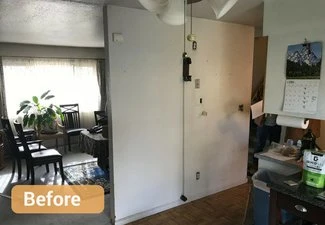
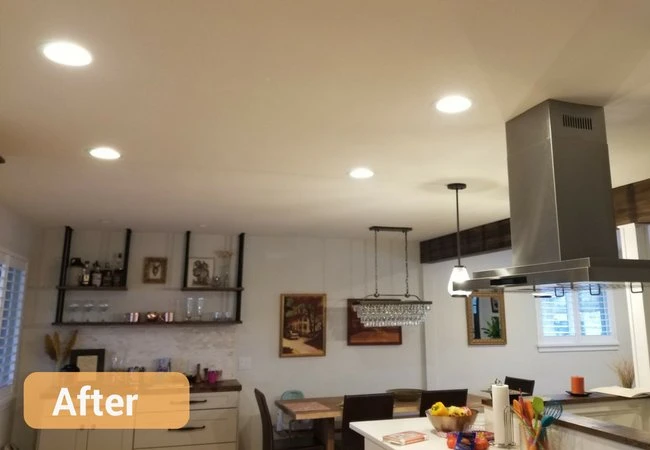
“Can we take out a wall between the kitchen and the living room?”

You can picture it perfectly: a bright, open space where your kitchen flows seamlessly into the living room. The only thing standing in your way is that one wall. But before you start planning the demolition, you have to know: is it a load-bearing wall? Answering this is the critical first step to successfully knocking down walls for an open floor plan. It’s the difference between a simple update and a major project that requires a new beam installation for an open concept. This is a common request we get at our firm, LEVEL Engineering, from homeowners across the Denver Metro area, and we’re here to help you get it right.
“Can we take out a wall between the kitchen and the living room?”
So, we decided to film a recent beam installation and explain how it works using a box demonstration (shown in the video). We recently created a similar video/article that you can check out here!
This demonstration mainly applies to a specific type of house. These are typically smaller single story homes that have more confined and possibly claustrophobic spaces. Front to the back of the house is typically a span of about 22-30 feet in depth. There is typically a center wall that interrupts the living room and kitchen.
Post WWII, there were millions of these made in the 40’s, 50’s, 60’s.
So the questions is…
“Can we take the wall down?”
“Is my wall load bearing?”
With all of the information in this video and article, it is general. Please call your local engineer for any questions.
If you are in Colorado, feel free to give us a call with any questions you may have. 720-408-0119
The Allure of Open Spaces: Pros and Cons
The open-concept floor plan has been a dominant trend in home design for years, and it’s easy to see why. Tearing down walls to create a single, large living space can completely transform the feel of a home, especially in the classic post-war builds common around Denver. It promises a brighter, more connected way of living. But before you grab a sledgehammer, it’s important to weigh the benefits against the potential drawbacks. This kind of major change impacts not just your home’s aesthetic but also its functionality and structural integrity. Thinking through both sides of the coin will help you decide if an open layout is truly the right fit for your lifestyle and your house.
Advantages of an Open Floor Plan
One of the biggest draws of an open floor plan is the immediate sense of spaciousness. By removing walls that divide the kitchen, living room, and dining area, you create a more connected and expansive environment. This layout is fantastic for social gatherings, allowing you to cook and entertain without being separated from your guests. Fewer interior walls also mean that natural light can flow freely through the space, making your home feel brighter and more airy. This enhanced connectivity and light can make even smaller homes feel much larger, which is a primary reason many homeowners explore remodels to achieve this modern, open feel.
Potential Downsides to Consider
While open concepts are great for togetherness, they can lack privacy and quiet. Sound travels easily without walls to block it, which can be challenging if family members are trying to do different activities at once, like watching TV while another person is on a work call. Another practical issue is clutter; a mess in the kitchen is a mess in the living room, as there’s nowhere to hide it. Most importantly, you can’t just remove any wall you don’t like. Many interior walls are load-bearing, meaning they support the structure of your home. Incorrectly removing one can lead to serious issues like sagging ceilings or foundation damage. That’s why a professional structural inspection is a non-negotiable first step before starting any demolition.
Is It a Load-Bearing Wall? Let’s Talk Trusses
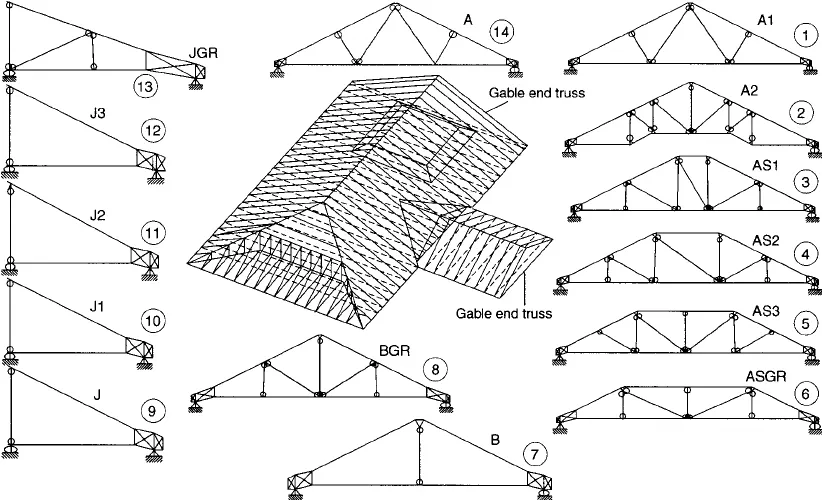
Trusses come in a lot of configurations. See examples below.
A Truss is an engineering exercise of minimizing the amount of lumber to support the same load as the rafter system. This supports roof load, shingles, snow load (depending on your geographical area), and any other load above the system.
Key Signs of a Load-Bearing Wall
So, how can you tell if that wall is doing some heavy lifting? While a professional diagnosis is the only way to be certain, there are a few clues you can look for. Start by heading to your basement or crawlspace. If you see a wall or a steel column directly beneath the wall in question, that’s a strong indicator it’s bearing a load. Another common sign is the wall’s orientation. If it runs perpendicular to the ceiling joists above it, it’s likely structural. Central walls that run down the spine of the house are also prime suspects, as they often support the weight of the floors above and the roof structure. These are just initial observations, but they can help you understand why a professional opinion is so critical before you pick up a sledgehammer.
Why Professional Confirmation is Non-Negotiable
Trying to determine if a wall is load-bearing on your own is a risky gamble. While the signs above are helpful, they don’t tell the whole story. Your home’s structure is a complex system, and removing a key component can have serious consequences, from sagging ceilings and cracked drywall to major structural failure. It’s simply not worth the risk. A qualified structural engineer can provide a definitive answer. They will conduct a thorough assessment, analyze your home’s original plans if available, and determine exactly what the wall is supporting. This professional confirmation is the essential first step for any load-bearing wall removal project, ensuring the work is done safely and your home remains structurally sound for years to come.
Planning Your Open Floor Plan: The First Steps
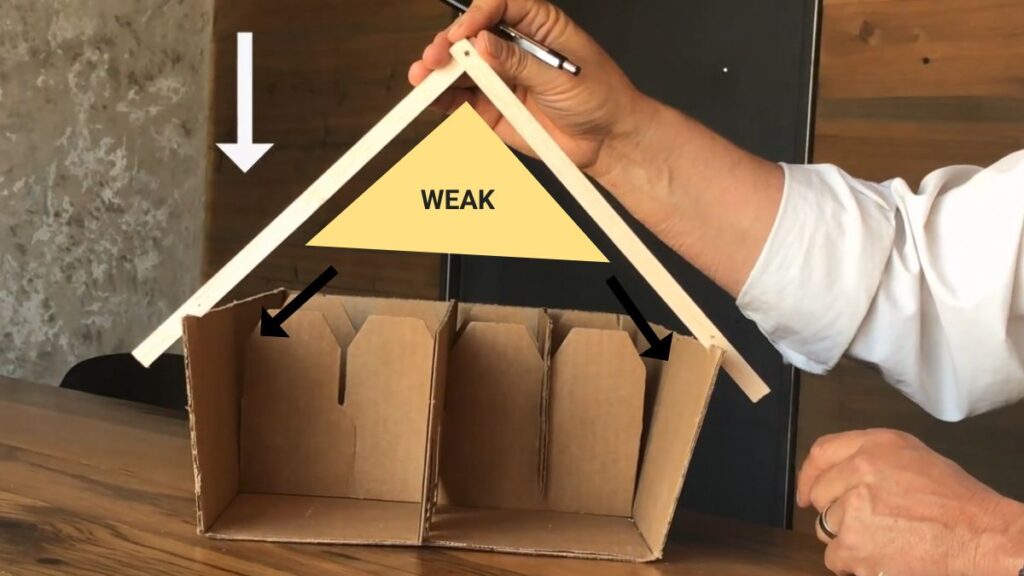
We need to establish a triangular shape for load support. Without that, we see too much of a load on certain areas of the structure. For example, in the images below, one has a triangle shape created by the two roof rafters and the ceiling.
In the second image, you can see the when you take away the triangle, you put too much weight on the outer walls, which causes serious issues.
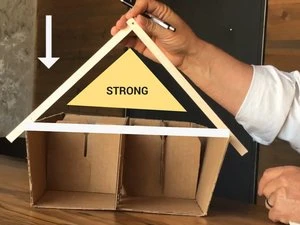
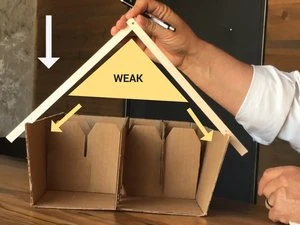
When you remove a wall, you are oftentimes severing that ceiling portion of the triangle shape. This completely takes that triangle away causing this issue.
Project Planning and Safety Checklist
Okay, so you’ve decided you want to take down a wall. Before you grab a sledgehammer, let’s walk through a few crucial planning steps. A little prep work now can save you from major headaches, unexpected costs, and dangerous situations later. Think of this as your pre-demolition checklist. It’s all about making sure you know exactly what you’re getting into, from what’s hiding inside the wall to how long your living room will be a construction zone. Getting these details sorted out first will make the entire process smoother and safer for everyone involved.
Checking for Utilities and Hazardous Materials
First things first: you need to play detective and figure out what’s inside the wall. It’s not uncommon to find electrical wiring, plumbing pipes, or HVAC ducts running through interior walls, and accidentally hitting any of these can lead to a very bad day. You’ll also want to consider the age of your home; older houses might have hazardous materials like asbestos or lead paint lurking in the drywall or plaster. A professional can help you safely identify and handle these elements. A thorough structural inspection is often the first step to uncovering what lies beneath the surface before any demolition begins.
Protecting Your Home During Demolition
Removing a wall is messy business. Dust and debris will get everywhere if you don’t take steps to contain it. Before any work starts, be sure to seal off the work area from the rest of your house using plastic sheeting and painter’s tape. Cover furniture and flooring, and turn off your HVAC system to prevent dust from circulating through your vents. It’s also a good idea to wear protective gear like safety glasses, gloves, and a dust mask. Protecting your home and yourself from the mess is a non-negotiable part of the process that makes cleanup much more manageable once the wall is down.
Understanding the Project Timeline
While some home improvement shows make wall removal look like a weekend project, the reality is often more complex. For a simple, non-load-bearing wall with no utilities, you might be looking at a few days of work. However, if you’re dealing with a load-bearing wall, the timeline expands significantly. You’ll need time for an engineering assessment, creating plans, getting permits, installing a new support beam, and then all the finishing work. Rerouting plumbing or electrical will also add time. It’s best to think of this as an advanced project and plan for potential delays.
Budgeting for Your Wall Removal
Now for the big question: how much is this going to cost? The price for removing a wall can range from a few hundred dollars to tens of thousands, depending on the complexity. The biggest factor, by far, is whether the wall is load-bearing. But other things like rerouting utilities, repairing floors and ceilings, and hiring professionals will also impact your bottom line. It’s essential to create a detailed budget that accounts for all potential expenses, so you’re not caught off guard by surprise costs halfway through the project.
Cost Estimates: Load-Bearing vs. Non-Load-Bearing
The cost difference between removing a non-load-bearing and a load-bearing wall is significant. Taking down a simple, non-structural wall might cost under $1,000, especially if you handle some of the finishing work yourself. However, the cost for a load-bearing wall removal can jump to $3,000 for a single-story home and upwards of $10,000 for a multi-story house. This is because it requires a new beam and support columns, which involves a structural engineer to design the solution, more materials, and more intensive labor to ensure your home remains structurally sound.
Factoring in Professional Fees and Additional Costs
Beyond the basic demolition, your budget needs to include fees for the team of experts you’ll likely need to hire. This starts with a structural engineer to assess the wall and design the new support system. From there, you may need an electrician to move outlets and switches, a plumber to reroute pipes, and a drywall contractor and painter for the finishing touches. Don’t forget to budget for things like debris disposal, potential flooring patches, and the cost of building permits. Each of these professional services adds to the total project cost, but they are essential for a safe and polished result.
Navigating Permits, Regulations, and Insurance
This might be the least glamorous part of the project, but it’s one of the most important. Skipping permits or ignoring regulations can lead to fines, trouble selling your home in the future, and even serious safety risks. You also need to think about your neighbors and your insurance provider. Taking the time to handle the paperwork and make the right phone calls ensures your project is done legally, safely, and without causing any friction with the people around you. It’s all about protecting your investment and your peace of mind.
Building Permits and Regulations
While you might not need planning permission for an internal wall, you will almost always need to follow building regulations, especially for a load-bearing wall. Most cities and counties require a building permit for any structural change to a home. This process ensures the work is inspected and meets local safety codes. The requirements can vary, so your first step should be to contact your local building department. Working with a firm like Level Engineering can simplify this, as we can prepare the necessary structural engineering plans required for the permit application.
Party Walls and Home Insurance Considerations
If you live in a semi-detached home, townhome, or condo, the wall you want to remove might be a “party wall”—a wall shared with a neighbor. If this is the case, you are legally required to notify your neighbor and get their permission before you begin any work. You may even need a formal Party Wall Agreement. Separately, it’s a smart move to call your home insurance provider before you start a major renovation. Let them know about the scope of the project to ensure your policy remains valid and that you’re covered in case anything goes wrong during construction.
How to Remove the Wall & Install a Support Beam

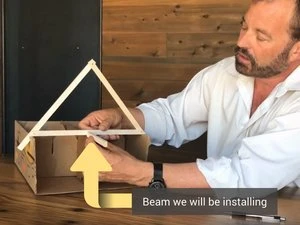
For this specific project, we installed 3 beams due to the span that it was supporting. Please see video above for actual installation.
Thanks for reading!
Please leave a comment below or give us a call if you have any questions.
Finishing the Job and Exploring Alternatives
The Finishing Touches: Patching and Painting
Once the structural work is complete and your new support beam is securely in place, the demolition phase is over, but the project isn’t quite finished. Now comes the part where your new, open space truly takes shape. You’ll have gaps in the ceiling, floor, and adjoining walls where the old wall once stood. These areas will need to be patched with new drywall, taped, and mudded to create a smooth, seamless surface. A skilled contractor will also match the existing texture on your ceiling and walls, a crucial step for making the new work blend in perfectly. After that, it’s time for primer and a fresh coat of paint to unify the entire area, finally giving you the clean, cohesive look you’ve been dreaming of.
Alternatives to Complete Wall Removal
While a complete wall removal creates the most dramatic change, it isn’t the only way to make your home feel more open and connected. If you’re not ready for a full demolition, consider creating a large cased opening or a half-wall (also called a pony wall). These options can significantly improve sightlines and light flow between rooms while maintaining a subtle sense of separation. A half-wall is also a practical choice, as it can preserve valuable electrical outlets and provide a surface for furniture placement. These creative solutions are often part of larger remodeling projects and can achieve that open-concept feel while working within different budgets and structural constraints, giving you the best of both worlds.
Frequently Asked Questions
Okay, I’ve checked for the signs you mentioned. Can I now be sure my wall is load-bearing? Looking for clues in your basement or attic is a great starting point, but it’s not a final diagnosis. Think of it like using WebMD—it gives you an idea, but you still need a doctor for a real answer. A structural engineer can see how the entire system of your home works together. They provide the certainty you need to move forward safely, ensuring that what seems like a simple wall isn’t secretly holding everything up.
Who should I call first: a structural engineer or a contractor? For any project involving a wall you suspect is structural, your first call should always be to a structural engineer. They are the ones who determine if the wall is load-bearing and then design the specific plan—including the right size beam and supports—to remove it safely. A contractor will then use those official plans to do the physical work. Starting with an engineer ensures the project is designed correctly from the very beginning.
Is it possible to remove a load-bearing wall myself to save money? I completely understand the desire to save on project costs, but this is one area where DIY is not the answer. Removing a load-bearing wall is a complex structural procedure that, if done incorrectly, can lead to sagging floors, cracked walls, or even catastrophic failure. The safety of your home and family is paramount, and this job requires the precision and expertise of licensed professionals to be done right.
What are the most common unexpected costs I should budget for? Beyond the main engineering and construction fees, a few things can pop up. The biggest surprise is often flooring. You’ll have a gap where the wall used to be, and patching it to perfectly match your existing floors can be tricky and sometimes expensive, especially with older hardwood. Rerouting hidden plumbing or electrical can also add to the bill, as can the need to perfectly match ceiling textures after the new beam is installed.
Will creating an open floor plan always increase my home’s value? While open-concept layouts are highly desirable and often do add value, it’s not an absolute guarantee. The final value depends heavily on the quality of the work. A seamless, well-finished project that feels original to the home is a definite asset. However, a poorly executed job with an awkward beam or mismatched finishes can have the opposite effect. It’s also worth noting that some buyers still prefer the privacy of more traditional, separate rooms.
Key Takeaways
- Start with a Structural Engineer: Before any demolition, a professional must confirm if the wall is load-bearing. This non-negotiable first step is the only way to ensure your project is safe and your home remains structurally sound.
- Budget for the Entire Project, Not Just Demolition: The total cost includes more than just taking down a wall. Remember to factor in expenses for engineering plans, permits, rerouting utilities, installing a new support beam, and finishing work like drywall and flooring.
- Weigh the Lifestyle Impact: An open floor plan improves light and flow but can reduce privacy and increase noise. If you’re hesitant, alternatives like a wide cased opening or a half-wall can create a more connected feel without a full commitment.
