
Clients are asking for it and new regulations demand it. The bar for sustainability in the construction industry is higher than ever, putting a spotlight directly on the role of the structural engineer. It’s no longer just about strength and stability; it’s about building with the environment in mind. This is the core of sustainable structural engineering. It’s a holistic approach that integrates structural sustainability from the very first sketch, creating buildings that are efficient, responsible, and built for the future. This is how we meet—and exceed—modern expectations.
In this article, we’ll discuss sustainable structural engineering and state its relevance to the modern world. We’ll answer the question, what is the difference between structural and sustainable structural engineering? We’ll share the current sustainable structural engineering solution and provide insight into how structural engineers can adopt more sustainable designs.
What is Sustainable Structural Engineering and Why is it Essential?
Sustainable structural engineering is a practice that requires structural engineers, just like any other profession in any other industry, to minimize environmental pollution. Sustainable structural engineering practices include:
- Minimizing the incorporated energy in construction materials
- Minimizing on-site waste
- Minimizing energy use of the finished construction product
- Utilizing recyclable and renewable structural materials
- Maximize the durability of the structural system
- Conserving the environment serves as the natural habitat before, during, and after the structural construction phase.
Why are sustainable structural engineering practices more critical now than ever? The world is currently facing climatic challenges such as:
- Global warming threatening the existence of coral reefs and sea ice
- Constant rising sea levels increasingly create the risk of catastrophic flooding
- Changing (unpredictable) weather patterns that threaten food production
The built environment plays a significant role in controlling climatic challenges since it influences the environment through energy consumption and emissions. Structural engineering activities involve:
- Construction activities in sites hosting green fields that risk destroying wildlife habitats
- Consumption of energy during construction
- The heavy plant machinery which relies on carbon fuels
- Incorporated energy within construction materials
- Buildings’ energy requirement during the usage phase
Today, construction projects account for 40% of carbon emissions and 36% of the energy used globally. The areas that structural engineers must pay keen interest in include:
- Quarrying for raw materials that risks polluting water sources (underground and surface waters)
- Manufacturing and transportation of construction materials, which influence carbon emissions. For instance, cement manufacturing contributes 2.8 billion tons of carbon emissions to the environment. The current increase in construction activities and urbanization risk raising it to 4 billion tons annually.
Having informed decisions at each stage of a new construction project bring huge environmental influence, and applying sustainable construction approaches will minimize your company’s negative influence on the environment. An example is the sustainable waste management approaches during the structure’s usage. Additionally, green structures require less operating costs. Research claims that applying the latest sustainable structural construction technologies could deliver annual savings worth $400 billion in global spending on energy. As a client, you must know that your specification for a new building or building modification significantly affects the project’s specification and, consequently, the structure’s operation costs.
The Environmental Footprint of the Building Industry
It’s easy to think of environmental impact in terms of cars or factories, but the buildings we live and work in play a massive role. The construction industry is a huge consumer of global resources, with projects accounting for a staggering 40% of carbon emissions and 36% of the energy used worldwide. This footprint isn’t just from on-site machinery; it includes the entire lifecycle, from sourcing and transporting materials to powering the final structure. That’s why professionals are focusing on smarter, more sustainable approaches in both residential and commercial structural engineering.
The materials themselves are a major part of the equation. Cement production, for instance, contributes about 2.8 billion tons of carbon emissions annually, and that number is expected to grow with increased urbanization. This single material highlights the urgent need for change. As engineers and designers, we have a responsibility to consider the entire supply chain and choose materials that are not only strong and durable but also have a lower environmental cost. This is a core principle of sustainable structural engineering for any project.
The Full Spectrum of Benefits of Sustainable Engineering
When we talk about sustainable engineering, the conversation often centers on environmental impact, and for good reason. But the advantages go far beyond just being “green.” Adopting sustainable practices in your construction or remodeling project creates a ripple effect, producing significant economic and social benefits as well. It’s about designing smarter, more efficient, and healthier spaces that not only protect the planet but also improve your quality of life and your bottom line. From lower utility bills to creating more inclusive and comfortable environments, the perks are comprehensive. Let’s look at how this forward-thinking approach pays off in every category.
Economic Benefits
Choosing sustainable design is one of the smartest financial decisions you can make for your property. While there can be upfront investments, the long-term savings are substantial. Sustainable buildings are designed for efficiency, which means lower monthly utility bills for heating, cooling, and electricity. In fact, research shows that applying modern sustainable construction technologies could lead to annual savings of $400 billion in global energy spending. This efficiency also increases your property’s value, making it more attractive to future buyers. Whether you’re planning a commercial remodel or a new home build, integrating sustainable engineering from the start ensures your investment is not only responsible but also financially rewarding for years to come.
Social Benefits
Beyond the numbers, sustainable engineering focuses on creating spaces that are better for people. A key goal is to build healthier indoor environments with improved air quality and abundant natural light, which can enhance mood, productivity, and overall well-being. Think of a home office that feels bright and energizing or a living room that’s a genuine sanctuary. Furthermore, sustainable design often incorporates principles of universal design, making buildings more accessible and user-friendly for everyone, including individuals with disabilities. This commitment to human-centric design ensures that the spaces we build, from accessory dwelling units (ADUs) to large commercial properties, truly serve the communities they are part of.
Environmental Benefits
At its core, sustainable structural engineering is about minimizing our footprint. This means designing and constructing buildings in a way that causes the least possible harm to the environment. This is achieved by using renewable or recycled materials, reducing construction waste, and designing systems that consume less energy and water. The positive impact extends beyond the building itself. By prioritizing thoughtful site planning and material selection, sustainable projects can help protect local ecosystems, preserve natural habitats, and support biodiversity. Every decision, from the type of foundation used to the materials chosen for the frame, contributes to a healthier planet for future generations.
How Structural Engineers Champion Sustainability
Structural engineers plan, analyze, design, construct, inspect, monitor, maintain, rehabilitate and demolish temporary and permanent structures or structural elements. Structural engineers design robust, durable, and stable structural elements. Structural engineering practices and sustainability practices have the same goals.
To achieve structural sustainability in buildings and structural components, sustainable structural engineering practices direct structural engineers to:
- Consider technical, environmental, social, economic, and aesthetic aspects of the structures during the design, construction, use, and maintenance stages.
- Know the design function of the structure, such as municipal, educational, residential, coastal, historical, religious, commercial, institutional, multi-family, or mixed-use.
- Design with the mindset that the depletion rate of raw or natural materials is high
- Design for a sustainable structural material that consumes reduced energy, emits minimized carbon gases and is durable and robust to perform the intended function. Structural materials include concrete, wood, steel, aluminum, plastics, and composites.
- Minimize the use of steel and concrete and maximize the use of materials with less environmental degradation.
- Design for sustainable structural elements such as beams, trusses, columns, arches, plates, shells, and catenaries. It involves practicing structural analysis of these structural elements to ensure that they are sustainable for the structure. For example, analyzing the statically determinate and indeterminate structural beams under loadings.
- Design for maximum structural flexibility to enable future changes in the structural use of the building in its lifetime.
Sustainable Design: A Collaborative Approach
Creating a truly sustainable building isn’t a solo mission; it’s a team effort from the very beginning. While a structural engineer is a key player in ensuring a building is safe and durable, they are just one part of a larger design team. Achieving genuine sustainability requires close collaboration with architects, mechanical engineers, and contractors. Each expert brings a unique perspective to the table, from the building’s overall aesthetic and energy systems to the materials used in construction. This interdisciplinary approach ensures that every decision, from the foundation to the roof, is made with the environment in mind. At Level Engineering, our architects and engineers work hand-in-hand to create designs that are not only structurally sound but also environmentally responsible.
This collaborative process allows the team to take a holistic view of the project. It’s not just about using recycled steel or bamboo flooring. It’s about considering the entire lifecycle of the building—from design and construction to long-term use and maintenance. The team evaluates the technical, environmental, social, and even economic impacts of every choice. This comprehensive planning is becoming more common, especially as cities and clients increasingly require certifications like LEED (Leadership in Energy and Environmental Design). By working together, the design team can make informed decisions that reduce waste, conserve energy, and ultimately create a healthier space for everyone, minimizing the project’s overall environmental footprint.
Key Solutions in Sustainable Structural Engineering
Structural engineers can take several steps to control the environmental effects of the structural design and improve its value. The current sustainable structural engineering solution, including
- Improvement in life-cycle performance
- Specification of recycled materials
- Use of substitute materials.
Energy Efficiency in Design
At its core, sustainable structural engineering is about creating buildings that are not only strong but also kind to the environment. A huge part of this is designing for energy efficiency. This means thinking about how a building uses energy from the very first sketch. It involves selecting materials with good insulating properties, orienting the building to take advantage of natural light and heat from the sun, and designing a structure that can support features like solar panels or green roofs. For homeowners and developers, this approach leads to lower utility bills and more comfortable living and working spaces. When planning a new home build or addition, an engineer ensures the design is not just safe and sound, but also optimized for long-term energy performance.
Smart Water Management
Water is a precious resource, and sustainable design treats it that way. Smart water management involves integrating systems that conserve and reuse water throughout a property. This can include installing water-saving fixtures, designing systems for rainwater harvesting, and even recycling “gray water” from sinks and showers for irrigation. A key role for an engineer is to design smart drainage systems that manage stormwater runoff effectively, preventing soil erosion and protecting the building’s foundation. Proper water management isn’t just about sustainability; it’s also crucial for the long-term health of your structure. A well-designed system protects your investment by directing water away from critical areas, which is a core principle of good foundation engineering.
Life Cycle Assessment (LCA)
To truly understand a building’s environmental impact, we have to look at the bigger picture. That’s where a Life Cycle Assessment (LCA) comes in. This method evaluates the environmental footprint of a building across its entire life—from the extraction of raw materials and manufacturing of components to construction, daily use, and eventual demolition or recycling. An LCA helps engineers and architects make more informed choices. For example, it might show that using locally sourced timber has a lower overall impact than using steel shipped from overseas, even if the steel itself is recyclable. By considering the full journey of every material, we can identify opportunities to reduce waste and pollution at every stage of a project, making it a fundamental part of a thoughtful architectural process.
Mitigating Environmental Impact During Construction
A project’s commitment to sustainability is tested long before the keys are handed over. The construction phase itself can have a significant environmental impact, but with careful planning, it can be minimized. This involves strategies to reduce harm to the natural surroundings, such as choosing building sites thoughtfully to preserve existing habitats and implementing strict controls for dust, noise, and soil erosion. An engineer’s plans can specify methods for responsible waste management, promoting recycling and reuse of materials on-site. They also play a role in designing foundations and site layouts that require less excavation and disruption to the land. These practices are vital for protecting local ecosystems and ensuring the project is a good neighbor from day one, a key consideration in both residential and commercial projects.
Improving a Structure’s Life-Cycle for Better Sustainability
Structural engineers design most structures to reduce the initial project’s cost instead of the entire project’s life costs. For instance, the cost of constructing a bridge is usually lower than the costs of maintaining and demolishing it, yet engineers hardly consider the entire structural life design costs.
You can slightly increase the initial construction costs to reduce maintenance dramatically and allow for salvage or disposal at the ultimate structural life; as a result, you will reduce the structural life-cycle costs. When you reduce the life cycle costs, structures become more sustainable than other structural engineering practices. Sustainable structural engineering has focused on improving structural life-cycle performance and made it an objective to improve structures’ economic and environmental performance significantly.
For example, structural engineers who designed Traversina Bridge in Switzerland used locally available timber to maintain the bridge without additional support. The design makes the bridge sustainable since the design objective has helped establish a structure with improved environmental performance and economic life cycle costs.
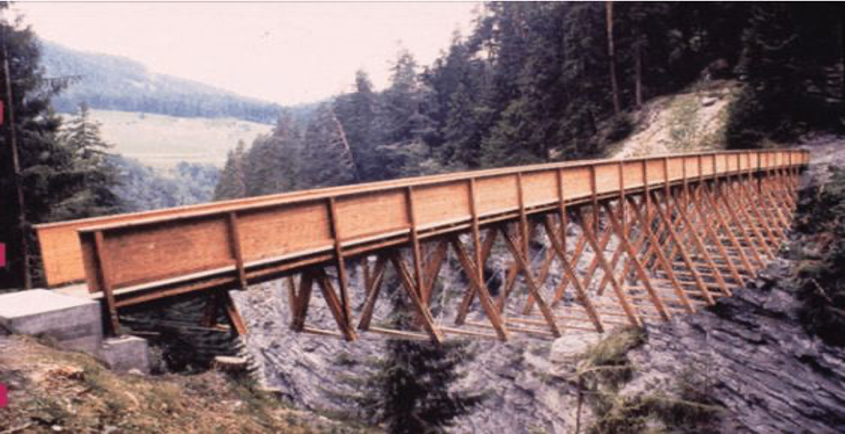
Figure 1: Traversing Bridge showing the use of locally available timber to enhance its sustainability.
Choosing Recycled and Salvaged Structural Materials
The traditional construction method excavates raw resources and processes them into useful construction products. Structural engineers now look for alternative material sources. The built environment is estimated to contain more copper than their ore. Hence call you to consider mining the construction materials in the built environment.
Today’s sustainable structural engineering recycles and salvages construction materials that former engineers sometimes extracted back from the earth. Salvaging and recycling solve growing waste disposal and landfill challenges.
The current sustainable structural engineers design and make concrete from waste products and salvaged materials. When making concrete for sustainable structural elements, you can use fly ash, waste products, and recycled aggregates to replace Portland cement and natural aggregates. We hope that future structural engineers will make concrete primarily from waste products and salvaged materials since the resultant product has low initial costs and improved environmental and engineering performance.
Moreover, structural designers have also sought to maximize structural design flexibility to give room for future changes in the structural use of the building during its service life. An example is Stansted Airport Terminal, which provides maximum flexibility and uses recycled materials. Stansted Airport Structure uses steel, the best structural material for sustainable construction. Steel modules provide a long span that enables significant interior flexibility and building expansion for future needs. Lastly, if the user does not need the structure, the structural engineer disassembles the structural elements and reuses them to build another structure. Salvaging structural materials like steel is better than recycling because of the high energy needed for recycling.
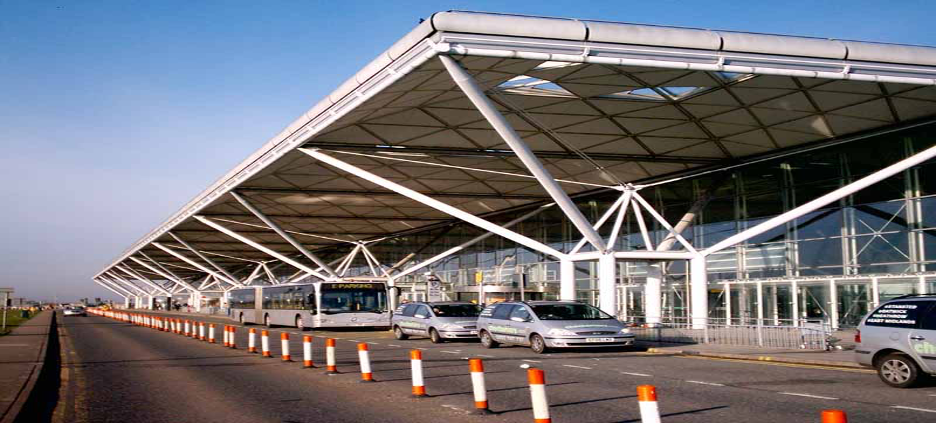
Figure 2: Stansted Airport displays the use of steel modules to provide long-span and other design features that enhance its sustainability.
Finding Sustainable Alternatives to Traditional Materials
Structural engineers in the United States use two basic structural materials: concrete and steel. Regrettably, concrete and steel use massive amounts of energy to process and emit much carbon into the environment. These structural materials have inherent benefits and will remain dominant structural systems. However, you can explore substitute structural materials. Sustainable structural engineering involves investigating construction materials with low environmental effects. Structural engineers work to build and implement structural elements made of paper. You can explore substitute materials specifically for structures with short life plans to attain engineering goals of economics and efficiency while minimizing construction environmental effects.
Examples of Innovative Green Materials
The push for sustainability has sparked incredible creativity in material science. Instead of solely relying on newly extracted resources, structural engineers are finding value in what was once considered waste, reducing landfill pressure and the demand for new extraction. Even traditional materials like concrete are getting a green makeover, with modern techniques using industrial byproducts like fly ash to replace some cement and create a durable concrete with a smaller environmental footprint. Steel is another great example; London’s Stansted Airport terminal was built with recycled steel modules, a design that allows for future flexibility and even disassembly for reuse. These innovations, along with explorations into unconventional substitutes like paper, show how a commitment to sustainability is reshaping the future of construction.
Adopting More Sustainable Structural Designs
How can structural engineers adopt more sustainable designs? Structural engineers can go deep to adopt more sustainable designs by minding:
- Sustaining living
- Zero waste
- Zero carbon
Structural engineers can mind sustainable living when designing residential structures for their clients. It involves putting effort into building structures without volatile organic materials (VOC) and sufficient water supply to promote:
- Motivation
- Good lifestyles,
- Workers’ well-being and health.
Sustainable structural engineering practices that create a framework to consider consumers’ health and happiness enable structural engineers to adopt more sustainable designs.
Structural engineers focus on waste reduction before, during, and after construction. However, you can think about ways to design for reuse or deconstruction. Deconstruction is the ability to retrieve a structure’s elements for ready reuse. Structural engineers can use bolted joint connections instead of welded ones. Thus, you can maximize the chances to design for deconstruction to promote zero waste at the end of the structure’s life. A design to deconstruct the structural system considers material durability, the usability of reversible connections, prefabrication of structural elements, and the use of the material of minimized lifetime incorporated energy. Zero waste structural design is one-way structural engineers can adopt more sustainable designs.
Thirdly, structural engineers can focus on zero carbon emissions to adopt more sustainable designs. You can pay attention to locally available resources for construction materials, primarily recycled or reclaimed structural materials. When considering on-site materials for construction design, you can reduce carbon emissions from long-distance transportation. In addition, you also support the local economy. Examples of such locally available materials include using grated sand to make sand for constructing outdoor structural elements like pavements. Similarly, the application of reused steel qualifies to be a locally available material that promotes zero emission. Hence, you can consider achieving zero emissions to adopt more sustainable designs.
The Role of Green Building Certifications
When we talk about sustainable construction, it’s helpful to have a way to measure and verify that a building is truly “green.” This is where green building certifications come in. Think of them as a report card for a building’s environmental performance. These certifications provide a clear and respected framework for designing, constructing, and operating buildings in a way that minimizes their impact on the planet. They aren’t just about earning a plaque for the lobby; they represent a real commitment to energy efficiency, resource conservation, and creating healthier indoor spaces for the people who live and work inside them.
For homeowners and developers, pursuing a green building certification offers tangible benefits that go far beyond environmental stewardship. Certified buildings often have lower operating costs due to reduced energy and water consumption, which is a huge plus for any budget. They also tend to have higher property values and are more attractive to potential buyers or tenants. For the design and construction team, these certifications provide a valuable roadmap. They guide decisions on everything from material selection to system design, ensuring that every aspect of the project aligns with sustainability goals. One of the most widely recognized systems for this is LEED certification.
Understanding LEED Certification
LEED, which stands for Leadership in Energy and Environmental Design, is a globally recognized green building certification system developed by the U.S. Green Building Council (USGBC). It operates on a points-based system where projects earn points for implementing various sustainable strategies. These can range from using recycled materials and installing water-efficient fixtures to ensuring excellent indoor air quality and choosing a site with access to public transportation. The total number of points a project earns determines its certification level: Certified, Silver, Gold, or Platinum.
Achieving LEED certification requires careful planning and collaboration from the very beginning of a project. It means that architects and engineers must work together to create integrated designs that meet these high standards. For anyone planning a new home build or a commercial development, aiming for LEED certification is a powerful way to ensure the final structure is cost-effective to run, healthy for its occupants, and gentle on the environment. It’s a forward-thinking investment that pays dividends for years to come, both financially and for the well-being of the community.
Key Challenges in Sustainable Structural Engineering
Even though sustainable engineering provides solutions to minimize environmental pollution in the built environment, several long-term challenges face structural engineers. The challenges strike the profession in 3 main areas:
- Practice
- Research
- Education
Challenges in Professional Practice
Structural engineering practice encounters crucial problems in the attempt to provide construction sustainability, such as emerging policies and the economic nature of sustainable engineering practices. The construction industry rewards structural engineers based on the initial construction costs instead of the project’s life cycle costs. Sustainable structural engineering results in low life cycle costs after high initial costs. This makes structural engineers design and construct bridges and buildings with high life cycle costs and more environmental consequences. For instance, the low life cycle costs can drastically reduce spending (government and private sector) spending on structures. Therefore, effective policies allow structural engineers to account for disposal and maintenance costs and initial costs (entire life design) during structural design.
Challenges in Research and Development
Structural engineering is constantly focusing on evaluating and maintaining available structures. The increase in the invention of non-destructive structural testing approaches over the past few years proves the claim. It shows that structural engineers are busy improving built environment sustainability by extending the lifetime of available structures instead of building new structures. Therefore, structural engineers require new options for practicing sustainable construction. In addition, the structural engineering community needs new materials made from waste products to construct structures with lower economic costs and environmental impact. Ideally, a sustainable built environment would assist in absorbing excess carbon gases and using waste products from all other sectors to solve the landfill challenges. The objective of a sustainable built environment needs collaboration between practice, government, and learning institutions. Therefore, research in sustainable structural engineering must attach to design, policy, social and economic impacts.
Challenges in Engineering Education
Only 6% of high school graduates want to study structural engineering in college. The figure has reduced from 9% back in 1992. This is challenging since structural engineering education is the best way to create engineers and leaders.
Your Role in Building a Sustainable Future
Structural engineering practices consume a large share of natural resources. However, with the developing issues about climate change and the depletion of naturally existing construction materials, there is a growing pressure on structural engineers to reduce the environmental impacts of their construction practices by practicing sustainable structural construction or green building.
Revised construction policies can change the minimum required levels for designing and constructing a structure today. A structural engineer needs to know the meaning of sustainability, its importance in improving the well-being of the built and natural environment, and the steps that the construction industry takes to improve the environmental impact of construction activities on society. Therefore, you must advance your construction technology to provide structures with reduced energy needs and embodied energy.
References
· https://courses.washington.edu/cee380/ochsendorf.pdf
· https://www.istructe.org/resources/blog/5-actions-design-sustainably/
· https://www.structuremag.org/?p=17858

Frequently Asked Questions
Does building sustainably cost more than traditional construction? It’s a common question, and the honest answer is that it can sometimes involve a higher initial investment. However, it’s more accurate to think of it as a shift in spending rather than just an increase. By focusing on high-performance materials and smart design from the start, you significantly reduce long-term operating costs. Lower monthly utility bills, less maintenance, and higher property value mean that a sustainable building often pays for itself over time, making it a financially savvy choice.
How early in my project planning do I need to think about sustainability? You should think about it from the very beginning. True sustainability isn’t a feature you can add on later; it’s a core part of the design process. Discussing your goals with your architect and engineer during the initial concept phase allows them to integrate sustainable strategies seamlessly. This collaborative approach ensures that everything from the building’s orientation on the site to its structural system is optimized for efficiency and environmental performance, which is far more effective than trying to make changes down the line.
Is getting a green certification like LEED really worth it for a smaller project, like a home addition? While full LEED certification is often pursued for larger commercial projects, the principles behind it are valuable for any project, regardless of size. You don’t have to go for the official plaque to benefit from the framework. Using the LEED checklist as a guide for your home addition or remodel can help you and your design team make smarter choices that lead to a healthier, more comfortable, and less expensive home to run. It’s about adopting the mindset, not just chasing the label.
My engineer already focuses on safety and durability. Isn’t that sustainable enough? Safety and durability are absolutely fundamental to good engineering, and they are a big piece of the sustainability puzzle—a building that lasts is one that doesn’t need to be replaced. However, sustainable engineering takes a much broader view. It considers the entire life cycle of the structure, including the environmental impact of the materials before they even arrive on site, the energy the building will consume over decades, and how the components can be reused or recycled at the end of its life. It’s about being responsible for the building’s total footprint.
Besides using recycled materials, what other practical steps make a design more sustainable? Material choice is important, but it’s just one aspect. A huge impact comes from intelligent design. This includes orienting the building to maximize natural light and minimize the need for artificial lighting and heating. It also involves designing efficient systems for water management, like rainwater harvesting, and creating flexible interior spaces that can adapt to future needs without requiring a major demolition and rebuild. These design strategies work together to create a structure that is inherently more efficient and has a lighter touch on the environment.
Key Takeaways
- Sustainable design benefits your wallet and well-being: Beyond its positive environmental impact, this approach reduces long-term operating costs and creates healthier indoor spaces with better air quality and natural light.
- Look beyond initial construction to the entire lifecycle: True sustainability involves evaluating a building’s impact from start to finish, including choosing materials with a lower environmental cost and designing for long-term energy efficiency.
- A collaborative approach is non-negotiable: Creating an environmentally responsible building requires early and continuous teamwork between architects, engineers, and contractors to ensure every decision supports the project’s green goals.
