
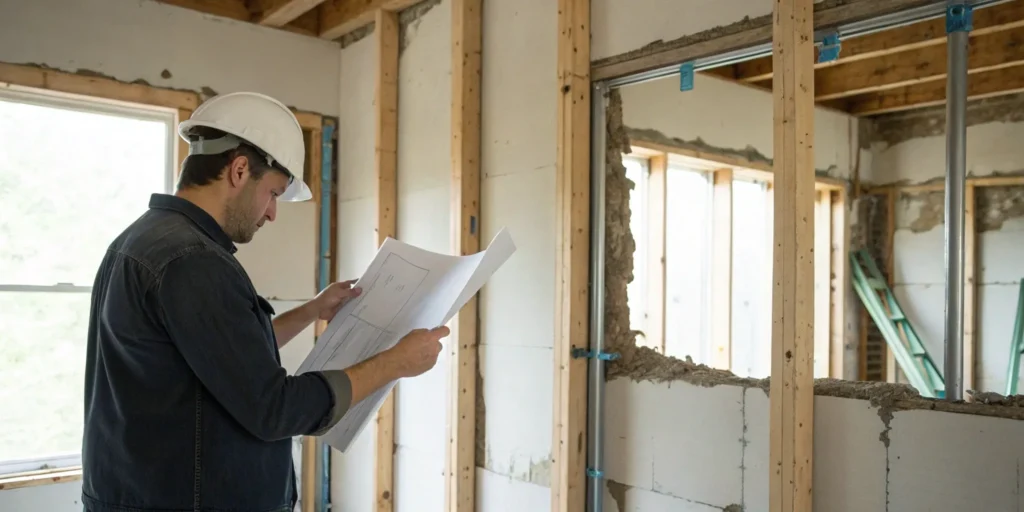
It seems so simple on home renovation shows: a few swings of a sledgehammer and a wall is gone. In reality, that single act could jeopardize the entire structure of your home. Guessing whether a wall is load-bearing is a high-stakes gamble that can lead to costly, dangerous consequences. Protecting your home’s integrity starts with a professional assessment, not a gut feeling. A licensed structural engineer is the only person qualified to make that call and design a safe solution. This guide explains why their detailed wall removal structural reports are the most important tool you’ll have for your project, providing the certainty you need before any demolition begins.
That wall separating your kitchen from your living room has been on your mind for months. You can already picture the open, airy space perfect for entertaining. But before you start planning the demolition party, there’s a critical question to answer: is that wall holding up your house? Removing a load-bearing wall without a proper plan can lead to sagging floors, cracked drywall, or even catastrophic structural failure. This isn’t a weekend DIY project; it’s a job that requires precision and expertise. That’s why your first and most important step is to consult a structural engineer for load bearing wall removal. This guide will walk you through the entire process, from identifying a structural wall to understanding the costs and finding the right professional for the job.
Key Takeaways
- Confirm, Don’t Assume: Before any demolition begins, a structural engineer must determine if a wall is load-bearing. This professional assessment is the most critical first step to prevent dangerous structural damage and ensure your project starts on a safe foundation.
- Secure Your Permit and Plan: An engineer provides the official, stamped plans required to obtain a building permit. These detailed drawings also serve as the essential roadmap for your contractor, ensuring the new support system is built correctly and to code.
- Vet Your Engineer Carefully: Protect your investment by hiring the right expert. Always verify their Professional Engineer (P.E.) license, confirm they have experience with residential projects, and ask for proof of liability insurance before moving forward.
How Can You Tell If a Wall Is Load-Bearing?
Before you grab a sledgehammer and start creating that open-concept living space you’ve been dreaming of, it’s critical to figure out if the wall you want to remove is load-bearing. These walls are essential to your home’s structural integrity, and removing one without the right support can lead to serious, costly damage. While a structural engineer is the only person who can tell you for sure, there are a few clues you can look for to get a better idea of what you’re working with.
Key Clues Your Wall Is Structural
A load-bearing wall is exactly what it sounds like: it holds up the weight of the structure above it, whether that’s a second story, the roof, or both. Think of it as part of your home’s skeleton. A few signs can suggest a wall is carrying a significant load. Often, these walls run perpendicular to the floor or ceiling joists. If you can see the joists in your basement or attic, check which direction they run. Exterior walls are almost always load-bearing, as are walls located near the center of your home, as they often support the main beam. A professional structural engineer inspection is the only way to know for certain.
More Ways to Identify a Structural Wall
If you have an unfinished basement or attic, you can do a little detective work. Take a look at the floor joists—those are the parallel beams that support the floor or ceiling. A wall that runs perpendicular to the joists above it is a strong candidate for being load-bearing, as it’s likely supporting their weight. Location is another big hint. As a rule of thumb, exterior walls are almost always structural. Interior walls near the center of your home are also suspect, as they often align with beams that support the entire structure. These clues can help you form an educated guess, but they aren’t foolproof and shouldn’t be the basis for any demolition.
While these clues are helpful, they aren’t a substitute for a professional evaluation. The only way to know for sure if a wall is structural is to have a structural engineer conduct an assessment. They have the training and tools to definitively identify which walls are critical to your home’s stability and which can be safely removed. Trying to remove a structural wall without a proper plan can lead to sagging floors, cracked walls, and even structural collapse. It’s a risk that’s simply not worth taking when an expert can give you a clear, safe path forward for your project.
Common Wall Removal Myths, Busted
One of the biggest mistakes homeowners make is assuming that an interior wall is “just a divider.” While some walls are simply partitions, others are critical structural components, and it’s often impossible to tell the difference just by looking. Another common myth is that you can save money by handling the removal yourself. Without a proper assessment, you risk causing sagging floors, cracked drywall, or even a catastrophic collapse. This isn’t a weekend DIY project; it’s a job that requires precise calculations and professional plans to ensure your home remains safe and sound. Getting expert advice on load-bearing wall removal is the first and most important step.
Do I Really Need a Structural Engineer for Wall Removal?
That open-concept living space you’ve been dreaming of is absolutely within reach, but taking a sledgehammer to an interior wall isn’t the first step. Before any demolition begins, you need to know if that wall is carrying a structural load. If it is, removing it without a solid plan is like pulling a block from a Jenga tower—the whole structure could become unstable. This is where a structural engineer becomes your most valuable partner. They have the expertise to assess your home’s framework and design a safe, effective way to achieve your renovation goals without compromising your home’s integrity. Hiring an engineer isn’t just a suggestion; it’s a critical step for the safety, legality, and success of your project.
Protecting Your Home’s Structural Integrity
The most important reason to hire a structural engineer is to protect your home and everyone in it. A load-bearing wall is a key part of your home’s support system, holding up the weight of the floor or roof above it. Removing one without properly redistributing that load can lead to serious consequences, from sagging ceilings and cracked drywall to a catastrophic structural failure. An engineer’s job is to prevent that from happening. They perform a structural inspection to analyze how your home is built and then create a detailed plan to safely transfer the load to a new beam or columns, ensuring your house remains stable and secure for years to come.
Staying Legal: Permits and Building Codes
Beyond the immediate safety concerns, removing a load-bearing wall is a project that requires a building permit from your local municipality. City and county building departments have strict codes in place to ensure all construction work is done safely. To get that permit, you’ll almost always need to submit official plans stamped by a licensed professional engineer. An engineer ensures your load-bearing wall removal project is designed to meet or exceed these local requirements. This not only keeps your project legal but also protects you when it comes time to sell your home, as unpermitted work can cause major headaches with inspections and insurance.
Building Regulations vs. Planning Permission
It’s easy to get tangled up in municipal jargon, but when it comes to wall removal, there are two key terms to understand: planning permission and building regulations. Think of planning permission as the rules governing your home’s external appearance and its impact on the neighborhood. Since you’re changing an interior wall, you typically won’t need planning permission unless the project alters the outside of your house. Building regulations, on the other hand, are all about safety and construction standards. Removing a load-bearing wall is a major structural change, which means it absolutely falls under building regulations. A structural engineer creates the detailed plans that prove your project meets these critical safety codes, allowing you to secure the necessary permits.
What If It’s a Shared Wall?
If you live in a duplex, townhome, or any property with a shared wall, the project gets a bit more complex. This shared structure is often called a “party wall,” and you can’t just start demolition without involving your neighbor. Before any work begins, you must inform them of your plans. In many cases, you may need to enter into a formal agreement, sometimes called a Party Wall Agreement, to protect both you and your neighbor from potential damages or disputes. This legal document outlines the work to be done and how any issues will be resolved. Navigating this requires clear communication and often the guidance of professionals to ensure everything is handled correctly and cordially.
Informing Your Home Insurance Provider
Once you have your engineering plans and permits in hand, there’s one more important phone call to make: to your home insurance provider. A major renovation like removing a load-bearing wall significantly changes your home’s structure, and your insurer needs to know about it. Failing to inform them could potentially void your policy. If an issue arises during or after the construction—whether it’s related to the new beam or an unrelated incident—you could find yourself without coverage. A quick call to your agent ensures your policy is updated to reflect the changes, keeping your biggest investment protected. It’s a simple step that provides crucial peace of mind throughout the project and beyond.
What’s in a Wall Removal Structural Report?
A structural engineer doesn’t just tell you if a wall is load-bearing; they provide the solution. After a thorough assessment, they will deliver a set of professional plans that serve as the blueprint for your contractor. These drawings specify the exact size and type of beam needed to replace the wall, how it should be supported, and all the necessary connection details. This eliminates guesswork and ensures your contractor knows precisely how to execute the project safely and correctly. These detailed architectural and engineering plans are essential for getting accurate quotes from builders and are the key to transforming your space without creating new problems.
What Happens During a Structural Assessment?
So, you’ve decided to bring in a professional. Great choice! The process of getting a structural assessment is actually pretty straightforward. It’s designed to give you a clear, safe, and actionable path forward for your project. An engineer won’t just tell you “yes” or “no” about removing a wall; they’ll give you a complete game plan. The assessment typically breaks down into three key phases: a hands-on inspection at your home, the behind-the-scenes calculations and design work, and the final delivery of your official removal plan. This systematic approach ensures every detail is covered, from the existing structure to the final design, so you can move forward with confidence.
Step 1: The In-Home Inspection
The first step is a visit to your property. During this structural inspection, the engineer will conduct a thorough visual examination of the wall in question and the surrounding areas. They’ll take precise measurements, identify the construction materials, and analyze how your home’s weight is distributed from the roof all the way down to the foundation. They are trained to spot subtle but important clues, like sagging floors, ceiling joist directions, and hairline cracks, that tell the story of how your home handles its structural loads. This detailed, on-site analysis is the foundation for all the calculations and recommendations that follow.
Step 2: The Math Behind the Plan
After the site visit, the engineer takes all that data back to the office to do the math. This is where their expertise really shines. They will perform complex calculations to determine the exact loads—including the roof, floors, and everything in between—that the wall is currently supporting. Based on these findings, they will design a new support system to safely carry those loads once the wall is gone. This usually involves specifying the correct size and type of beam (like steel or LVL) and the necessary columns or posts to hold it up. This crucial step ensures your home’s structural integrity remains intact after the load-bearing wall removal.
Step 3: Getting Your Wall Removal Structural Report
Once the analysis and design are complete, the engineer will compile everything into a formal report and a set of structural plans. This package is your project’s official blueprint. It will clearly state their findings, confirm that the wall is load-bearing, and provide detailed, to-scale drawings of the new support system. These plans are exactly what your contractor needs to build everything correctly and what your local building department requires to issue a permit. Think of it as the official instruction manual for your renovation, ensuring the work is done safely and up to code, which is essential for any home addition or remodel.
How to Find the Right Structural Engineer
Finding the right structural engineer is just as important as deciding to remove the wall in the first place. You’re trusting this person with the structural integrity of your home, so it’s essential to do your homework. The right partner will not only provide the necessary calculations and plans but also give you peace of mind. Think of it like an interview process—you want to find a professional who is qualified, experienced, and a good fit for your specific project.
First Check: Verify Their License and Credentials
First things first: any structural engineer you consider must be a licensed Professional Engineer (P.E.). This isn’t just a nice-to-have; it’s a legal requirement for this kind of work. A licensed engineer is authorized to provide a stamped report, which is the official document you’ll need to submit for building permits. This stamp signifies that a qualified professional has reviewed and approved the plans, ensuring they are safe and compliant with local building codes. Don’t hesitate to ask for their license number and verify it with the state board. It’s a simple step that confirms you’re working with a legitimate expert in residential structural engineering.
Do They Specialize in Residential Projects?
Not all engineering is the same. An engineer who specializes in commercial high-rises might not be the best choice for your home renovation. Look for a firm with a strong portfolio of residential projects, specifically involving load-bearing wall removal. An experienced residential engineer understands the unique construction methods of homes and can quickly analyze your structure to design a safe, effective solution for redistributing the weight. They’ll know exactly what to look for during the inspection and how to create practical plans that your contractor can easily follow. Their focused experience means a smoother, more efficient process from start to finish.
Protect Yourself: Ask for Insurance and References
Before signing any contracts, make sure the engineer carries both general liability and professional liability (also known as errors and omissions) insurance. This protects you and your property in the unlikely event that something goes wrong during the project. A reputable engineer will have no problem providing proof of insurance. It’s also a great idea to ask for references from past clients who had similar projects done. Speaking to other homeowners can give you valuable insight into the engineer’s communication style, professionalism, and the quality of their work, helping you feel confident in your decision to hire them for a structural inspection.
Building Your Project Team
Once you have the engineer’s plans in hand, it’s time to assemble the team that will bring your vision to life. Your project team will primarily consist of two key players: the structural engineer who designs the solution and the contractor who builds it. The engineer provides the “what”—the detailed, stamped plans specifying the new beam and supports. The contractor handles the “how”—the demolition, installation, and finishing work. It’s crucial to hire a contractor who has experience with this type of structural work and can follow the engineer’s plans to the letter. These plans are the essential roadmap that ensures the project is executed safely and correctly, turning a complex load-bearing wall removal into a seamless renovation.
Key Questions to Ask Before You Hire
Your initial conversation with a potential engineer is the perfect time to gauge their expertise and see if they’re a good fit. Come prepared with a few specific questions to understand their process and approach. A few great questions to start with are:
- What is your process for determining if a wall is load-bearing?
- Have you worked on homes similar to mine before?
- What potential challenges do you foresee with my project?
- What will the final deliverables include (e.g., stamped drawings, calculations)?
Their answers will reveal their level of experience with projects like home addition plans and help you understand exactly what to expect.
How Much Does It Cost to Hire a Structural Engineer?
Let’s talk numbers. Budgeting for a home renovation can feel tricky, but understanding the costs upfront helps you plan effectively. Hiring a structural engineer is a critical investment in your home’s safety and integrity, not just another line item. The cost can be broken down into two main parts: the initial assessment and the fees associated with the full project plans. While the exact price will depend on your specific project, here’s a general idea of what you can expect to pay.
Breaking Down the Initial Assessment Cost
The first step is the initial assessment. For a structural engineer to come to your home and determine if a wall is load-bearing, you can generally expect to pay between $300 and $1,500. This fee covers the engineer’s time and expertise for the on-site structural inspection, where they’ll analyze your home’s framework. The final price within this range often depends on the complexity of your home’s structure, its size, and your location. A simple, straightforward assessment will be on the lower end, while a more complicated project will require more investigation and a higher fee.
Hourly Rate Options
Instead of a flat fee, some engineers charge by the hour for their services. These rates can vary widely depending on the professional’s experience and your location, but you can generally expect to see figures ranging from $100 to $250 per hour. This fee structure often covers the initial site visit, the time spent drafting your plans, and any follow-up consultations you might need. Keep in mind that the final cost for a complete set of drawings will likely involve several hours of work. A one-hour consultation might cost a few hundred dollars, while the detailed plans required for a load-bearing wall removal could take several more hours to complete. Always ask for an estimate of the total hours expected for your project so you can budget accordingly.
What Affects the Total Project Cost?
Once the wall is confirmed as load-bearing, the engineer’s work is just one piece of the puzzle. The total cost to remove a load-bearing wall averages around $5,700, but can range from $1,400 to $10,000. The structural engineer’s fee for creating the detailed removal and support plans typically falls between $350 and $800 of that total. The rest of the cost covers materials (like a steel I-beam), labor for demolition and installation, and finishing work like drywall and paint. The final price tag for your load-bearing wall removal will depend on the wall’s length, the complexity of the new support system, and any necessary foundation adjustments.
Budgeting for the Full Scope of Work
The engineer’s fee is just the starting point. To get a realistic picture of your total investment, you need to account for every step of the process, from demolition to the final coat of paint. Here’s what else to include in your budget:
- Labor: Your engineer’s plans are the roadmap, but you need a skilled contractor to follow it. Labor costs for a qualified team to handle demolition and install the new support beam are a significant part of the budget. This is not the place to cut corners; professional installation ensures the structural work is done safely and correctly, protecting your home’s integrity.
- Materials: The new beam that will replace your wall is the star of the show, and its cost reflects that. Whether your plans call for a steel I-beam or a Laminated Veneer Lumber (LVL) beam, this material will be one of your biggest expenses. The engineer’s report will specify the exact size and type needed, which will allow your contractor to price it out accurately.
- Waste Removal: Demolition is messy. Once the wall comes down, you’ll be left with a pile of drywall, wood studs, and other debris. You’ll need to factor in the cost of renting a dumpster or hiring a junk removal service to haul it all away. It’s a practical expense that’s easy to overlook in the initial planning stages.
- “Hidden” Costs: The project isn’t over once the beam is in place. Think about what was inside that wall—electrical wiring, outlets, light switches, or even plumbing pipes. These will need to be professionally re-routed. Then there are the finishing touches: patching the ceiling, walls, and floors; plastering; and painting to make your new, open space look seamless. These finishing costs are essential for completing your home remodel and should be a dedicated part of your budget.
For Context: Non-Load-Bearing Wall Costs
If your engineer determines the wall is not load-bearing, you can breathe a little sigh of relief when it comes to the budget. Removing a non-structural partition wall is a much less expensive project because you don’t need to design and install a new support beam. The costs are generally limited to demolition, waste removal, and the finishing work like patching drywall and floors. However, you might still have to deal with re-routing electrical or plumbing. The most important takeaway is that you must confirm the wall’s status with a professional structural inspection before you start—guessing wrong can turn a simple project into a structural nightmare.
The Renovation Process: What to Expect
Once you have your stamped plans and have hired a contractor, the real transformation begins. The construction phase is where your vision starts to take shape, but it’s also where patience is key. Knowing what to expect during the demolition and rebuilding process can help you manage your timeline and your stress levels. From the initial tear-down to the final coat of paint, each step is carefully orchestrated to ensure your home remains safe and the final result is exactly what you envisioned. Here’s a breakdown of the typical construction process and what you should keep in mind as your project unfolds.
How Long Does the Construction Take?
Removing a wall isn’t an afternoon project. The timeline depends heavily on whether the wall is load-bearing. A simple, non-structural partition wall might be gone in a day or two. However, for a load-bearing wall, the process is much more involved. Your contractor will need to build temporary supports, demolish the existing wall, and then install the new beam and columns according to the engineer’s plans. This structural work alone can take anywhere from three to seven days. The complexity of the project, the length of the wall, and any unforeseen issues can extend this timeline, so it’s best to plan for at least a week of construction for a load-bearing wall removal.
Special Considerations for Upper Floors
If the wall you want to remove is on an upper floor, the project becomes significantly more complex. These walls are not only supporting the roof and attic but are also transferring that weight down through the rest of the house to the foundation. Removing one requires an even more robust plan to ensure the load is properly redistributed without causing sagging ceilings or compromising the floors below. A structural engineer is absolutely essential in these situations. They will design a support system that safely carries the load, ensuring the integrity of your entire home is maintained. This is especially critical in larger home remodels where multiple structural changes might be happening at once.
Practical Details and Finishing Touches
The job isn’t finished once the new support beam is in place. After the structural work is complete, your contractor will need to address all the finishing details. This includes patching the ceiling, floors, and adjoining walls where the old wall used to be. It also involves rerouting any electrical wiring or plumbing that was inside the wall. From there, it’s all about the aesthetics: installing new drywall, taping, mudding, and finally, painting to make the new, open space feel seamless and complete. These finishing touches are a significant part of the project and should be factored into your overall budget and timeline from the very beginning.
Monitoring Your Home After the Project
After the dust has settled and you’re enjoying your new open-concept space, it’s a good idea to keep an eye on things. Your home will take some time to settle with its new structural configuration. Be on the lookout for any new, significant cracks appearing in the drywall around the new beam or in other areas of your home. Also, pay attention to any sagging floors or ceilings. While minor settling can be normal, anything more than a hairline crack warrants a call to your engineer. A forensic structural engineer can assess the situation to ensure the home’s integrity remains intact and give you peace of mind.
Thinking of DIY? Understand the Risks First
Tackling a home renovation yourself can be incredibly rewarding, but some projects are best left to the professionals. Removing a wall is definitely one of them. While it might look straightforward on a home improvement show, taking down the wrong wall without a solid plan can lead to a cascade of problems, from dangerous structural failures to serious legal and financial headaches down the road. Before you pick up a sledgehammer, it’s crucial to understand what’s at stake.
The Risk of Serious Structural Damage
Think of a load-bearing wall as a critical part of your home’s skeleton. It’s actively holding up the weight of the floor or roof structure above it. If you remove it without properly redistributing that load, the consequences can be severe. You might start to see sagging ceilings, cracking drywall, and doors that no longer close properly. In the worst-case scenario, the structure could collapse, causing catastrophic damage and putting anyone inside at risk. This isn’t about being overly cautious; it’s about understanding the physics that keep your home standing. A professional plan for load-bearing wall removal is essential to ensure your home remains safe and sound.
Permit Problems and Insurance Nightmares
Beyond the physical dangers, going the DIY route can land you in hot water with local authorities and your insurance company. Removing a structural wall almost always requires a building permit. This process ensures the work is planned correctly and inspected to meet safety codes. If you skip the permit, you could face hefty fines, be forced to rebuild the wall, and have the unpermitted work flagged in your property records. Furthermore, if a structural failure occurs because of unpermitted work, your homeowner’s insurance policy may refuse to cover the damage, leaving you with a massive repair bill. A proper structural inspection during a future sale will easily uncover any work done without a permit.
How It Affects Your Home’s Value
That unpermitted wall removal can also come back to haunt you when it’s time to sell. Potential buyers will have a home inspection done, and any signs of unauthorized structural changes are a major red flag. They will likely ask for the engineering plans and permits for the project. Without that documentation, buyers may walk away or demand a significant price reduction to cover the cost of fixing the issue properly. What started as a project to improve your home could end up costing you thousands and making your property much harder to sell. Protecting your investment means doing things the right way from the start.
When Else Should You Call a Structural Engineer?
While removing a load-bearing wall is one of the most common reasons to hire a structural engineer, their expertise is valuable for a wide range of home projects and concerns. Think of them as your home’s primary care physician for anything related to its structural “bones.” Whether you’re planning an exciting new renovation or have noticed some unsettling changes around your house, bringing in an expert provides clarity and a safe path forward. An engineer can help you diagnose potential issues before they become major problems and ensure that any new construction is built to last, protecting both your family and your investment.
Warning Signs of Structural Issues
Your home has ways of telling you when something is wrong. If you notice new, significant cracks in your drywall or ceilings, especially ones that are wide or run diagonally from the corners of doors and windows, it could be a sign of stress. Other red flags include sagging floors or ceilings, doors and windows that suddenly stick or won’t close properly, or visible gaps appearing between walls and floors. These symptoms suggest your home’s structure might be shifting or settling in a way it shouldn’t. Consulting a professional for a forensic analysis can help you understand the root cause and determine the best course of action to keep your home safe and sound.
Other Common Structural Projects
Beyond troubleshooting problems, structural engineers are essential partners for many types of home renovations. If you’re planning a major addition, building a new home from the ground up, or even adding an accessory dwelling unit (ADU) to your property, an engineer is a key part of the team. They work alongside architects to ensure the new structure is properly supported and seamlessly integrated with your existing home. This includes designing stable foundations, specifying the right materials for beams and supports, and creating the official plans you’ll need to secure building permits and guide your contractor through the construction process.
Related Articles
- How To Remove A Load Bearing Wall
- Load Bearing Wall Removal – Level Engineering & Inspection
- Do I Need A Permit For Structural Modifications?
- Residential Structural Engineering Services: Your Homeowner’s Guide
Frequently Asked Questions
My contractor is experienced. Can’t they just tell me if a wall is load-bearing? While a great contractor has a ton of hands-on experience, they aren’t a licensed structural engineer. An What if I hire an engineer and it turns out the wall isn’t load-bearing after all? That’s actually great news! Getting a professional opinion is the only way to be absolutely certain. If the engineer confirms the wall is just a partition, you’ll receive a letter or report stating their findings. This official documentation gives you peace of mind and is often still required by your local building department to prove the wall isn’t structural before they’ll approve your renovation project. How long does it typically take to get the final plans from an engineer? The timeline can vary, but the process is usually quite efficient. After the initial on-site inspection, it generally takes about one to two weeks for the engineer to complete the calculations and draft the detailed structural plans. More complex projects might take a bit longer, but your engineer will be able to give you a specific timeline after their initial visit. Is it ever impossible to remove a load-bearing wall? Technically, almost any wall can be removed with the right engineering solution. However, depending on the loads it carries and your home’s structure, the required support system—like a very large beam or multiple columns—might be more complex or costly than you anticipated. An engineer will lay out the safest and most practical options for you to decide if the project fits your budget and design goals. Once I have the engineer’s plans, what’s the next step? The structural plans are the official blueprint for your project. With these detailed drawings in hand, your next step is to share them with qualified contractors to get accurate and comparable bids for the construction work. The plans ensure that every contractor is quoting the exact same job, which helps you make a clear, informed decision.
